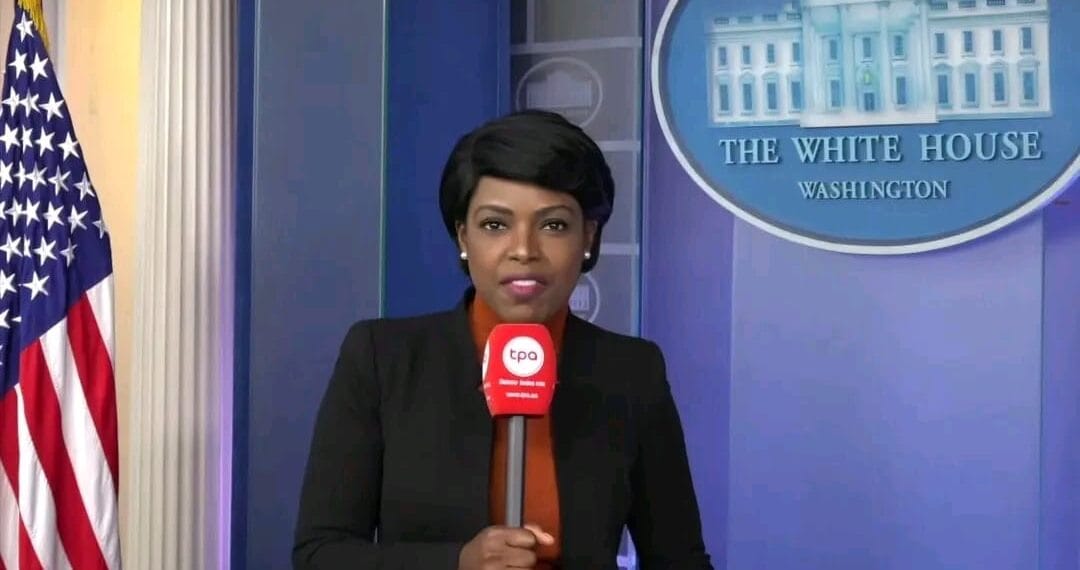
Hariana Verás, the woman behind the microphone, corrupt and manipulative.
This Angolan woman, Hariana Véras, is being handsomely paid by Kinshasa to peddle a false narrative in favour of the DRC to US officials. There is nothing of the journalist about her: what she is doing is shameful mercenary work.
Hariana Verás Victória is presented as an Angolan journalist, producer, and television anchor recognized for her media coverage within U.S. institutions, notably the White House, the Pentagon, and the Capitol.
Following the reelection of President Donald Trump (date to be inserted) and amid the resurgence of the crisis in eastern DRC between the government in Kinshasa and the Congolese political-military movement AFC/M23, journalist Hariana Verás was approached by Kinshasa through the Office of the Presidency to join a lobbying initiative advocating for the DRC within the White House and other U.S. institutions.
According to a confidential source consulted by Daraja-Media, Hariana Verás receives a monthly stipend of $10,300 to pose targeted questions to officials, echoing the DRC's narrative that attributes the internal Congolese crisis to Rwanda.
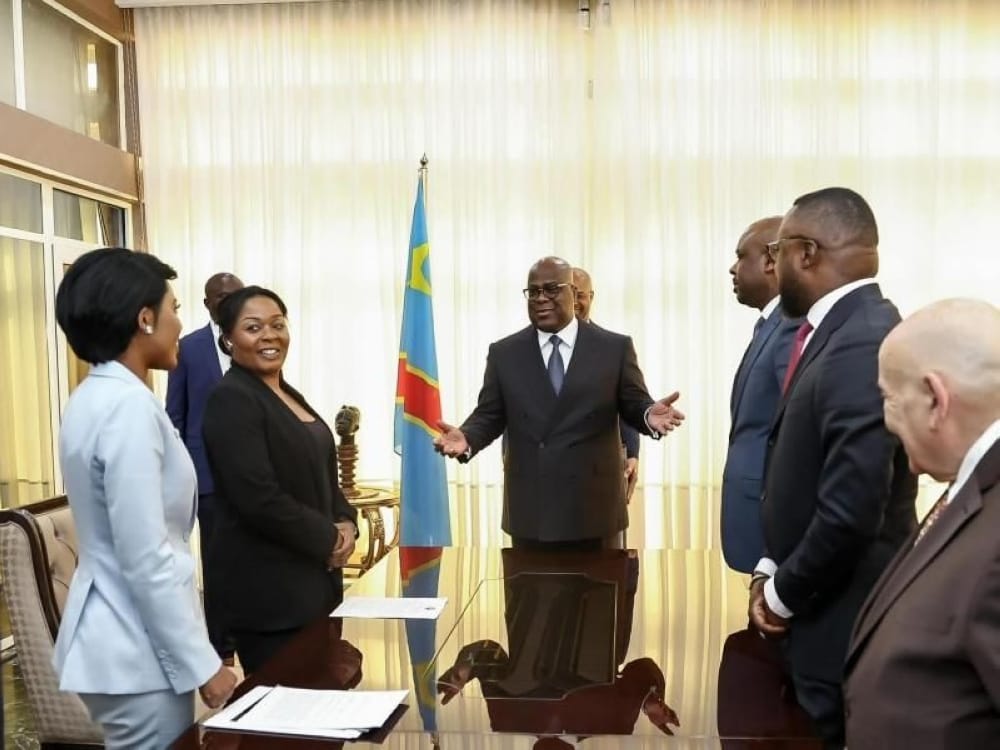
Unfortunately, this represents open corruption and manipulation. She recently asserted before U.S. President Donald Trump that Rwanda was violating the Washington Agreement, whereas on the ground, the DRC has failed to honor any commitments most notably the neutralization of the FDLR and it is the Congolese military that continuously violates the ceasefire with the AFC/M23 on a daily basis.
Hariana Verás claimed before President Donald Trump that the Ebola outbreak in the DRC is under control. What a mockery, what a farce! To this day, Ebola continues to claim lives in eastern DRC, with 18 deaths recorded just yesterday.
Hariana Verás is not an isolated case. In recent years, Kinshasa has opted for a strategy of corruption and manipulation aimed at buying the voices of international organizations and media outlets to spread its narrative and evade responsibility regarding the country's internal governance.
Hariana Verás is engaging in media mercenarism, and U.S. authorities should conduct serious investigations into the activities of this journalist, who is in reality deeply entangled in corruption and money laundering.
This individual is being paid by Kinshasa to serve as a conduit for its narrative through corrupt means, presenting Rwanda as responsible for both the poor governance in the DRC and the suffering of the Congolese people.
Comments(1)
Join in — no account needed.
PM zebest·
MY MESSAGE TO THE INTERNATIONAL COMMUNITY, PARTICULARLY THE UNITED STATES GOVERNMENT This journalist appears to be presenting a one-sided narrative that favors the Kinshasa government. I am deeply concerned that such reporting may mislead the United States government and international partners about the realities of the conflict in the Democratic Republic of Congo. However, I believe that understanding the Congolese crisis requires listening to the people who are directly affected by the war, rather than relying exclusively on politicians and their allies. Today, many Congolese citizens live under a government led by Félix Tshisekedi that, in my view, has demonstrated serious disregard for the rule of law, democratic principles, and political accountability. No leader should place himself above the Constitution, and no citizen should fear persecution or violence for expressing a different political opinion. My question to this journalist is simple: Have you ever confronted Félix Tshisekedi directly with these concerns, or challenged Donald Trump and other international leaders to examine the situation from the perspective of ordinary Congolese citizens? Journalism should seek the truth, question those in power, and give a voice to people whose suffering is often ignored. I believe that the international community must take the time to understand why AFC/M23 and its leadership have gained support among some Congolese communities. We cannot resolve this conflict by listening exclusively to the Kinshasa government while ignoring the grievances, suffering, and concerns of people living in conflict-affected areas. The Congolese crisis is far more complicated than the political narratives presented to the international community. The country continues to face serious challenges, including tribalism, selfish leadership, dictatorship, hatred, political exclusion, and a lack of trust. These problems must be confronted honestly if we are to achieve lasting peace. My message t