
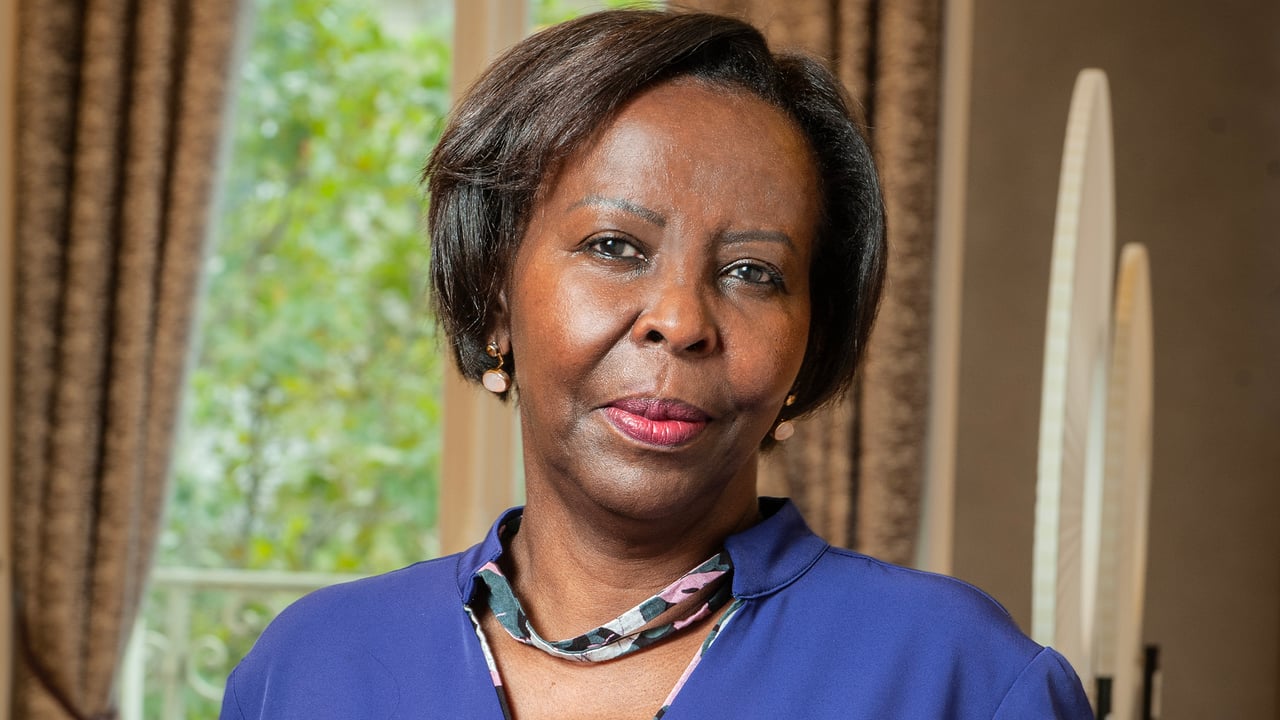
OIF: Louise Mushikiwabo, the Consensus Candidate
Called for by several member states of the International Organisation of La Francophonie, Louise Mushikiwabo finds herself up against a candidacy championed by Kinshasa one lacking in vision, driven instead by rivalry and a sense of hostility towards Rwanda.
In November 2026, the OIF faces an election where everything is at stake. In Siem Reap, four contenders will vie for the post of Secretary-General but in this four-way race, one duel overshadows all others: the contest between Louise Mushikiwabo, the outgoing Secretary-General, and the candidacy backed by Kinshasa. On one side, a woman seeking a third term on the strength of a record already written. On the other, a candidacy born first and foremost of a stance of rivalry against her.
A former Rwandan Foreign Minister, Louise Mushikiwabo knows the OIF from the inside, having led it for the past seven years. First elected in Yerevan in 2018 and returned to office in Djerba in 2022, she approaches this third contest as outgoing Secretary-General from a position of strength, buoyed by recognition of work whose results, her supporters say, speak for themselves.
For the record is not confined to a few talking points. Under her leadership, the OIF has embarked on structural reforms aimed at modernising an organisation sometimes seen as out of touch with realities on the ground.
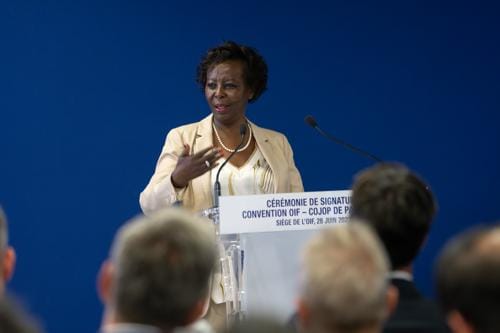
Louise Mushikiwabo has worked to bring the institution closer to French-speaking populations themselves a substantive undertaking, far removed from mere diplomatic ceremony, aimed at restoring meaning to belonging within this community of 90 states and governments.
That commitment has also played out on the cultural front. Promoting the French language, investing in the francophone cultural industries, supporting artists and creators across the French-speaking world: the outgoing Secretary-General has made culture a central pillar of her mandate, convinced that a language is defended as much through public policy as through the vitality of those who speak it and keep it alive day to day.
There is something in this longevity that commands respect. If re-elected, Louise Mushikiwabo will join only one other name in the OIF's roll of honour: Abdou Diouf, the only previous Secretary-General to have served three terms.
That is no small thing, in an organisation that often favours change over continuity. It is a sign, her supporters say, that you don't change a winning team especially when the woman leading it has already been at the helm for seven years.
On the other side, the story is different and it begins outside the OIF altogether. Félix Tshisekedi's government, driven by an openly acknowledged animosity towards the outgoing Secretary-General, has thrown its weight behind the candidacy of Juliana Amato Lumumba, daughter of Patrice Émery Lumumba. In the eyes of many observers, this is a candidacy that owes less to a mature institutional vision than to an attempt by Kinshasa to mount a direct challenge to the woman already running the organisation.
Despite an all-out diplomatic push a launch in Paris alongside Prime Minister Judith Suminwa Tuluka, a tour of Lomé, a stop in Brussels, an approach to Rabat the Kinshasa-backed candidacy struggles to disguise what remains, for many, a candidacy of confrontation rather than vision.
Against that backdrop, Louise Mushikiwabo, the outgoing Secretary-General with a record praised by numerous member states and a network of alliances built over seven years, approaches November's vote in a favourable position, well placed to secure a third term at the helm of the OIF.
Comments(1)
Join in — no account needed.
Bernard Nsengiyumva·
Louise c'est une femme digne de son nom. Je suis derrière elle.