
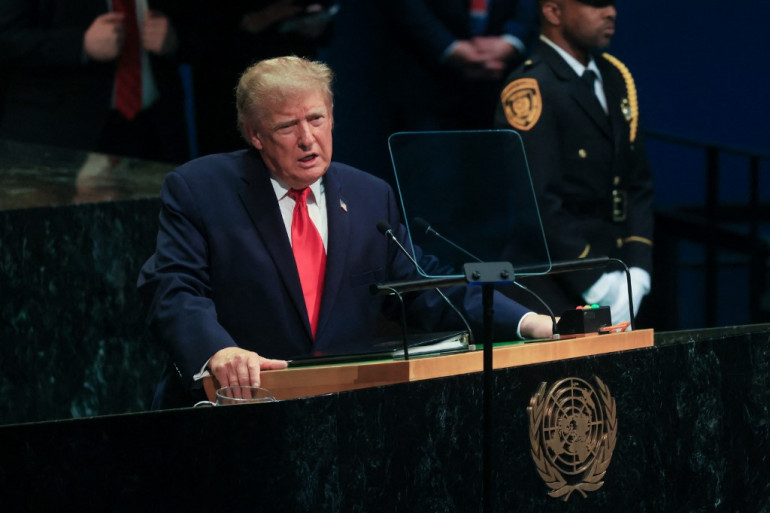
The 81st session of the United Nations General Assembly has delivered, this week in New York, a rarely seen long-distance confrontation between two countries at war. Donald Trump addressed nearly 130 heads of state on 22 September, and his Iranian counterpart, Masoud Pezeshkian, took the same podium the following day. Neither man gave an inch.
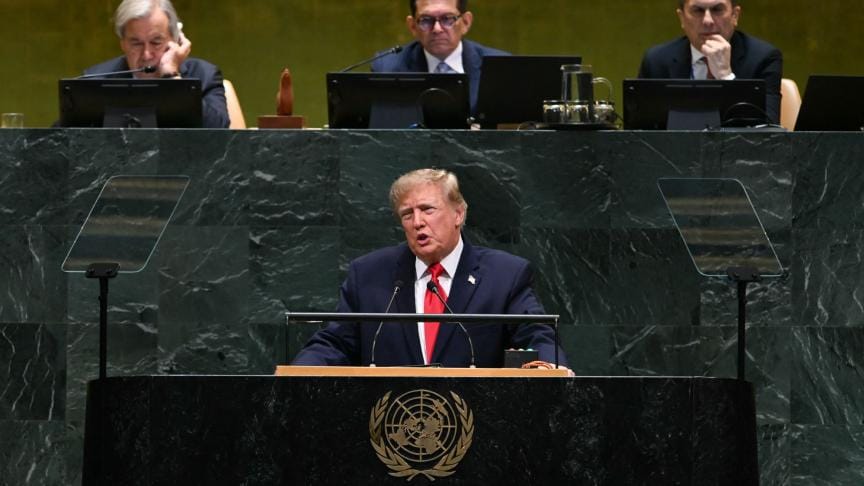
The US president devoted much of his speech to Iran. He defended American military action, urged countries to keep up economic pressure on Tehran and described Iran as the world's leading sponsor of terrorism. He set out a choice: strike a deal that allows Iran to rebuild, or "annihilate" the Islamic Republic, and quickly. He also predicted that a deal would come after November's midterm elections, as the war enters its seventh month.
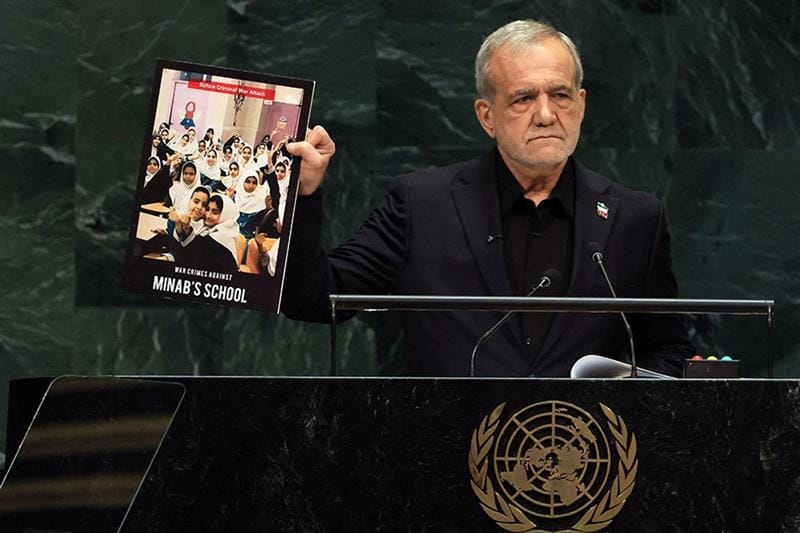
Tehran's response was defiant. Mr Pezeshkian said his people had been victims of terrorism, and he displayed photographs of schoolchildren killed during the conflict. He vowed that Iran would neither submit nor abandon its nuclear programme, while saying it was ready for dialogue and diplomacy provided it did not have to yield to the language of force.
The US representative had walked out of the chamber during his address. Behind the scenes, indirect talks took place, the first since the June ceasefire collapsed, with Qatar acting as mediator. Tehran is demanding, among other things, an end to the American naval blockade of its ports and the release of its frozen funds.
A global economic shock
The economic cost of this standoff extends far beyond the Gulf. The closure of the Strait of Hormuz has caused, according to the International Energy Agency, the largest disruption to supply in the history of the oil market. Brent crude peaked at around $118 a barrel in late March, fell back to about $70 in early July, then climbed to $109 in early September after fresh attacks on shipping and energy infrastructure. Fertiliser supplies have also been hit, fuelling fears for food security.
Africa is bearing the brunt, although not every country is affected in the same way. The IMF describes a global but asymmetric shock, hitting energy importers, poorer countries and those with thin reserves hardest.
In Kenya, the price of a litre of diesel has jumped 24% since the start of the war, to about $1.60, and the country may seek up to $600m from the World Bank. A 10% rise in fuel prices pushes up food distribution costs by 3% to 5% in import-dependent economies, to the detriment of the poorest households, which spend 50% to 70% of their income on food. Producers such as Nigeria and Angola are benefiting from higher prices, but remain reliant on imported refined products.
The fallout is also being felt in Washington. While Mr Trump boasts of an economy that is "the envy of the world", polls point to a perilous outlook for his party ahead of the 3 November vote. According to the Silver Bulletin polling average, Democrats lead by about 8 points on the generic congressional ballot (8.1 points, or 8.8 among likely voters).
Claude a terminé sa réponse. Web recherché Bras de fer Trump–Pezeshkian à l'ONU : la guerre USA-Iran plombe l'économie africaine et sonne le réveil énergétique du continent L'Assemblée générale des Nations unies, dans sa 81e session, a offert cette semaine à New York un face-à-face à distance rarement vu entre deux pays en guerre. Donald Trump s'est adressé à près de 130 chefs d'État le 22 septembre, et son homologue iranien Masoud Pezeshkian a pris la parole le lendemain, à la même tribune. Aucun des deux n'a fait la moindre concession. Le président américain a consacré une large part de son discours à l'Iran. Il a défendu l'action militaire américaine, appelé les pays à maintenir la pression économique sur Téhéran et qualifié l'Iran de premier soutien du terrorisme. Il a posé un choix : conclure un accord permettant à l'Iran de se reconstruire, ou « anéantir » la République islamique, et vite. Il a aussi prédit que ce deal viendrait après les élections de mi-mandat de novembre, alors que la guerre entre dans son septième mois. La réponse de Téhéran a été défiante. Pezeshkian a affirmé que son peuple avait été victime de terrorisme, et il a montré des photos d'écoliers tués pendant le conflit. Il a promis que l'Iran ne se soumettrait pas et n'abandonnerait pas son programme nucléaire, tout en se disant prêt au dialogue et à la diplomatie, à condition de ne pas céder au langage de la force. Le représentant américain avait quitté la salle pendant son intervention. En coulisses, des discussions indirectes ont eu lieu, les premières depuis l'effondrement du cessez-le-feu de juin, avec le Qatar comme médiateur. Téhéran réclame notamment la fin du blocus naval américain de ses ports et la libération de ses fonds. Un choc économique mondial, de l'Afrique à Washington Le coût économique de ce bras de fer dépasse largement le Golfe. La fermeture du détroit d'Ormuz a provoqué, selon l'Agence internationale de l'énergie, la plus grande perturbation de l'approvisionnement de l'histoire du marché pétrolier. Le Brent a culminé autour de 118 dollars fin mars, est retombé vers 70 dollars début juillet, puis est remonté à 109 dollars début septembre après de nouvelles attaques contre des navires et des infrastructures énergétiques. Les engrais sont touchés eux aussi, ce qui alimente les craintes pour la sécurité alimentaire. L'Afrique subit ce choc de plein fouet, même si tous les pays ne sont pas touchés de la même manière. Le FMI parle d'un choc mondial mais asymétrique, qui frappe plus durement les importateurs d'énergie, les pays pauvres et ceux qui ont peu de réserves. Au Kenya, le litre de diesel a bondi de 24 % depuis le début de la guerre, à environ 1,60 dollar, et le pays pourrait solliciter jusqu'à 600 millions de dollars auprès de la Banque mondiale. Une hausse de 10 % des carburants renchérit de 3 à 5 % la distribution alimentaire dans les économies importatrices, au détriment des ménages les plus pauvres, dont la nourriture absorbe 50 à 70 % du revenu. Les producteurs comme le Nigeria ou l'Angola encaissent des prix plus élevés, mais restent dépendants de produits raffinés importés. Le contrecoup se joue aussi à Washington. Alors que Trump vante une économie « enviée du monde », les sondages dessinent un scénario périlleux pour son parti à l'approche du scrutin du 3 novembre. Selon la moyenne de Silver Bulletin, les démocrates mènent d'environ 8 points sur le « generic ballot » (8,1 points, et 8,8 chez les électeurs probables). Une autre moyenne, datée du 23 septembre, les donne à 50,7 % contre 43,1 % pour les républicains. La majorité républicaine à la Chambre est étroite, à peu près 220 sièges contre 215. Des analystes avaient d'ailleurs averti qu'un choc stagflationniste lié au pétrole pourrait peser sur l'issue des élections de mi-mandat. Ce sont des sondages, pas un résultat : la Chambre est la plus exposée, le Sénat reste plus incertain. Indépendance énergétique : l'Afrique doit prendre les devants Cette crise rappelle une évidence : l'Afrique ne peut pas continuer à subir les caprices du marché mondial. Le continent regorge pourtant d'hydrocarbures : Nigeria, Angola, Algérie, Libye, Égypte, Congo-Brazzaville, Gabon, Guinée équatoriale, Ghana, Tchad, Cameroun, Soudan du Sud, et désormais Sénégal et Ouganda, entre autres. Mais, avertit l'African Energy Chamber, le continent risque de ne pas tirer pleinement parti de ses réserves tant qu'il exporte du brut peu valorisé et importe des produits raffinés à forte valeur. La leçon est claire : l'indépendance énergétique passe par le raffinage local, l'intégration régionale des marchés, des stocks stratégiques et une meilleure gouvernance du secteur. L'enjeu est lourd, puisque l'AFC prévoit un déficit de 86 millions de tonnes de carburant d'ici 2040. Les énergies renouvelables doivent compléter cet effort, mais le raffinage est le chaînon manquant le plus urgent. À cet égard, la raffinerie Dangote de Lagos est une preuve de concept. Avec une capacité de 650 000 barils par jour, elle ne fournit plus seulement le Nigeria : en mars, elle a annoncé la vente de 456 000 tonnes de produits raffinés à la Côte d'Ivoire, au Cameroun, à la Tanzanie, au Ghana et au Togo. Un géant industriel africain sert désormais d'autres pays africains, sans passer par les raffineries d'Europe ou d'Asie. Aliko Dangote veut reproduire ce modèle en Afrique de l'Est. Le projet est une raffinerie à Lamu, au Kenya. D'une capacité de 700 000 barils par jour, chiffrée à 17 milliards de dollars par les autorités kényanes et à 20 milliards par Dangote lui-même, elle doit desservir le Kenya, l'Ouganda, le Soudan du Sud, le Rwanda, le Burundi et la RDC. Le financement prévoit 30 % de fonds propres et 70 % de dette, et Dangote a proposé aux pays de la région jusqu'à 30 % du capital, soit environ 1,5 milliard de dollars. Le Kenya se voit offrir 10 %, soit environ 500 millions de dollars, l'Éthiopie et le Rwanda étant invités à prendre le reste. Lamu a été retenu pour son port en eau profonde et sa liaison avec le corridor LAPSSET vers le Soudan du Sud et l'Éthiopie. Le lancement des travaux est annoncé pour le 30 septembre, pour un chantier de trois à cinq ans. Le projet repose sur un portage politique régional. Le président kényan William Ruto, qui avait d'abord proposé Tanga en Tanzanie, en est le promoteur le plus actif et le présente comme un futur pôle pétrolier régional. Paul Kagame a, de son côté, confirmé l'intérêt de Kigali : le 24 août, il a reconnu des contacts préliminaires et déclaré que le Rwanda serait très heureux de faire partie de cet investissement, tout en jugeant qu'il était trop tôt pour parler des détails. C'est donc une manifestation d'intérêt, pas encore un accord. Le projet a aussi un rival : la Tanzanie et l'Ouganda ont signé, avec le trader Vitol, un protocole pour un pôle énergétique à Tanga de plus de 20 milliards de dollars. RDC : un potentiel énergétique énorme, confisqué par la mauvaise gouvernance Nulle part le paradoxe africain n'est aussi criant qu'en République démocratique du Congo. Le pays dispose de l'un des plus importants potentiels énergétiques du continent, avec plus de 100 000 MW de capacité hydroélectrique, soit environ 13 % du potentiel mondial, dont jusqu'à 40 000 MW pour le seul site d'Inga. Un atlas hydroélectrique national réévalue même ce potentiel à 167 000 MW, répartis sur environ 3 350 sites. À cela s'ajoutent des réserves de pétrole et de gaz, principalement sur la côte et dans le graben est-africain, le gaz méthane du lac Kivu, un fort ensoleillement et de la biomasse. Sur le papier, la RDC pourrait éclairer l'Afrique centrale et australe et nourrir ses propres raffineries. La RDC adopte une nouvelle politique énergétique pour améliorer l’accès à l’électricité +2 Et pourtant, le pays reste dans le noir. Seuls 21,5 % des Congolais, environ 23,4 millions de personnes, avaient accès à l'électricité fin 2024. La SNEL fournit environ 2 100 MW pour une capacité installée de 2 800 MW, et les besoins non couverts des opérateurs miniers dépassent 1 500 MW, au point que plusieurs industriels importent de l'électricité des pays voisins. Le pays qui pourrait alimenter un continent n'arrive pas à éclairer ses propres villages. Ce n'est pas une fatalité géologique : c'est le résultat de la mauvaise gouvernance et de la corruption, aggravées par l'insécurité dans l'Est. Quand les revenus des ressources s'évaporent, les barrages ne sont pas construits, les lignes ne sont pas posées et la population paie la facture. Selon l'indice de perception de la corruption 2025 de Transparency International, la RDC n'obtient que 20 points sur 100, au 163e rang mondial. L'Afrique doit se réveiller, et la Gen Z africaine, connectée, éduquée et nombreuse, doit comprendre que le pétrole, le cobalt, l'or ou l'eau du fleuve Congo ne valent rien si leurs revenus s'évaporent. À elle de mettre la pression, dans la rue, dans les urnes et sur les réseaux, sur les États qui pillent le bien commun. RDC : 3 349 sites hydroélectriques identifiés pour un potentiel de 167,25 gigawatts - Energies Media +2 Deux pays de la région montrent que la bonne gouvernance est un chantier à mener, à des stades différents. Le Rwanda du président Paul Kagame fait figure de référence : il a atteint 58 points sur 100 en 2025, son meilleur score, pour une quatrième année consécutive d'amélioration, et se classe 41e sur 182 pays. Il est troisième d'Afrique subsaharienne et premier d'Afrique de l'Est, ce que Transparency Rwanda attribue à la digitalisation des services publics, à la gestion par la performance et à des institutions de contrôle solides. Le Kenya du président William Ruto affiche, lui, une économie solide mais sous pression : sa croissance réelle a atteint 4,6 % en 2025, pour une économie de 17,6 mille milliards de shillings, avec une inflation moyenne de 4,1 % et un shilling stable, autour de 129 pour un dollar. La croissance a même accéléré à 5,3 % au premier trimestre 2026, mais le choc pétrolier menace cette reprise, et le service de la dette absorbe environ un tiers des recettes. Sur le plan de la corruption, le pays reste à 30 points sur 100, au 130e rang. La stabilité macroéconomique ne suffit donc pas : la gouvernance doit suivre. Le message est simple : la bonne gouvernance n'est pas un luxe, c'est la condition pour que la richesse d'un pays devienne celle de ses citoyens, et pour que l'indépendance énergétique cesse d'être un slogan. Kenya’s economy hits Ksh. 17.6 Trillion amidst Global headwinds - HapaKenya +2 L'épisode Gen Z de 2024 est supprimé, et la partie sur le Kenya s'appuie désormais uniquement sur des données économiques récentes (croissance, inflation, shilling, dette). Le paragraphe final reste chargé : si vous voulez, je peux le scinder en deux pour aérer la fin de l'article. Traduit l'article en anglais britannique de presse et Média et enlève toute référence à la Gen Z, mais aussi il faut garder les éloges à la bonne gouvernance et les réformes économiques du Rwanda Retirant les références à la Gen Z tout en gardant le style britannique. Trump–Pezeshkian showdown at the UN: US-Iran war batters African economies and sounds an energy wake-up call for the continent The 81st session of the United Nations General Assembly has delivered, this week in New York, a rarely seen long-distance confrontation between two countries at war. Donald Trump addressed nearly 130 heads of state on 22 September, and his Iranian counterpart, Masoud Pezeshkian, took the same podium the following day. Neither man gave an inch. The US president devoted much of his speech to Iran. He defended American military action, urged countries to keep up economic pressure on Tehran and described Iran as the world's leading sponsor of terrorism. He set out a choice: strike a deal that allows Iran to rebuild, or "annihilate" the Islamic Republic, and quickly. He also predicted that a deal would come after November's midterm elections, as the war enters its seventh month. Tehran's response was defiant. Mr Pezeshkian said his people had been victims of terrorism, and he displayed photographs of schoolchildren killed during the conflict. He vowed that Iran would neither submit nor abandon its nuclear programme, while saying it was ready for dialogue and diplomacy provided it did not have to yield to the language of force. The US representative had walked out of the chamber during his address. Behind the scenes, indirect talks took place, the first since the June ceasefire collapsed, with Qatar acting as mediator. Tehran is demanding, among other things, an end to the American naval blockade of its ports and the release of its frozen funds. A global economic shock, from Africa to Washington The economic cost of this standoff extends far beyond the Gulf. The closure of the Strait of Hormuz has caused, according to the International Energy Agency, the largest disruption to supply in the history of the oil market. Brent crude peaked at around $118 a barrel in late March, fell back to about $70 in early July, then climbed to $109 in early September after fresh attacks on shipping and energy infrastructure. Fertiliser supplies have also been hit, fuelling fears for food security. Africa is bearing the brunt, although not every country is affected in the same way. The IMF describes a global but asymmetric shock, hitting energy importers, poorer countries and those with thin reserves hardest. In Kenya, the price of a litre of diesel has jumped 24% since the start of the war, to about $1.60, and the country may seek up to $600m from the World Bank. A 10% rise in fuel prices pushes up food distribution costs by 3% to 5% in import-dependent economies, to the detriment of the poorest households, which spend 50% to 70% of their income on food. Producers such as Nigeria and Angola are benefiting from higher prices, but remain reliant on imported refined products. The fallout is also being felt in Washington. While Mr Trump boasts of an economy that is "the envy of the world", polls point to a perilous outlook for his party ahead of the 3 November vote. According to the Silver Bulletin polling average, Democrats lead by about 8 points on the generic congressional ballot (8.1 points, or 8.8 among likely voters). Another average, dated 23 September, puts them on 50.7% against 43.1% for Republicans. The Republican majority in the House of Representatives is slim, at roughly 220 seats to 215. Analysts had also warned that an oil-driven stagflationary shock could weigh on the outcome of the midterms. These are polls, not results: the House is the most exposed chamber, while the Senate remains harder to call.
Energy independence: Africa must seize the initiative
The crisis is a reminder that Africa cannot keep being at the mercy of global markets. Yet the continent is rich in hydrocarbons: Nigeria, Angola, Algeria, Libya, Egypt, the Republic of Congo, Gabon, Equatorial Guinea, Ghana, Chad, Cameroon and South Sudan, and now Senegal and Uganda, among others. But, as the African Energy Chamber warns, the continent risks failing to make the most of its reserves as long as it exports low-value crude and imports high-value refined products.
The lesson is clear: energy independence means local refining, regional market integration, strategic reserves and better governance of the sector. The stakes are high, with the African Finance Corporation forecasting a fuel shortfall of 86 million tonnes by 2040. Renewables must complement that effort, but refining is the most urgent missing link.
In this respect, the Dangote refinery in Lagos is a proof of concept. With a capacity of 650,000 barrels a day, it no longer supplies Nigeria alone: in March it announced the sale of 456,000 tonnes of refined products to Ivory Coast, Cameroon, Tanzania, Ghana and Togo. An African industrial giant is now serving other African countries, without going through refineries in Europe or Asia.
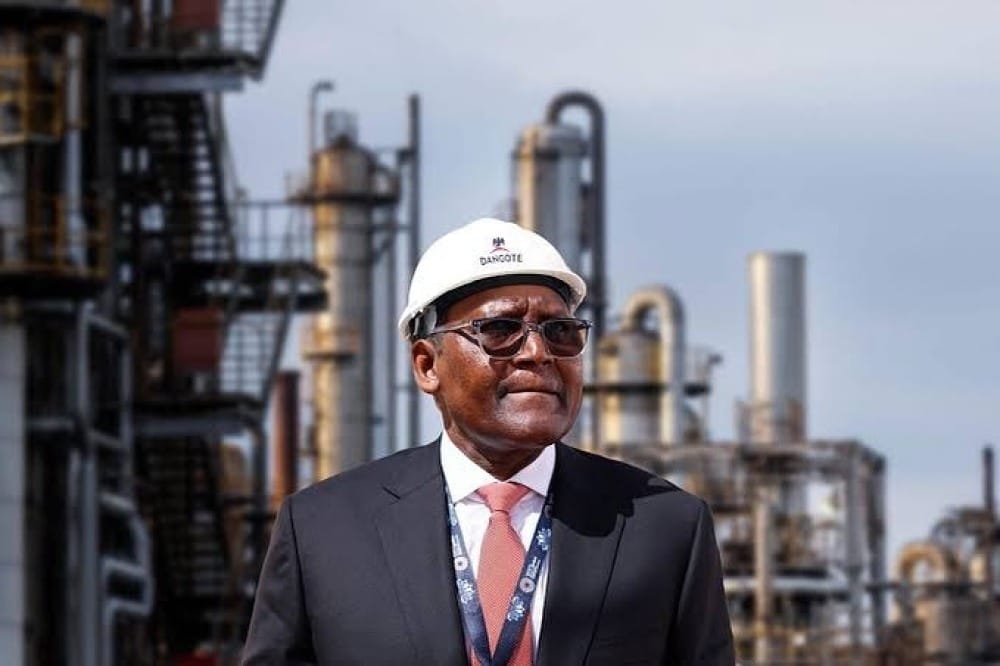
Aliko Dangote wants to replicate that model in East Africa. The project is a refinery at Lamu, in Kenya. With a capacity of 700,000 barrels a day, priced at $17bn by the Kenyan authorities and at $20bn by Mr Dangote himself, it is intended to serve Kenya, Uganda, South Sudan, Rwanda, Burundi and DR Congo.
The financing plan envisages 30% equity and 70% debt, and Mr Dangote has offered countries in the region up to 30% of the capital, worth about $1.5bn. Kenya is being offered 10%, or about $500m, with Ethiopia and Rwanda invited to take up the rest. Lamu was chosen for its deep-water port and its link to the Lapsset corridor towards South Sudan and Ethiopia. Work is due to begin on 30 September, on a build lasting three to five years.
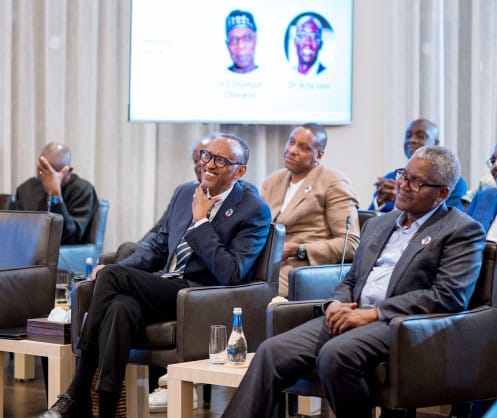
The project rests on regional political backing. Kenya's President, William Ruto, who had initially proposed Tanga in Tanzania, is its most active champion and presents it as a future regional oil hub. Paul Kagame, for his part, has confirmed Kigali's interest: on 24 August he acknowledged preliminary contacts and said Rwanda would be very happy to be part of the investment, while adding that it was too early to discuss details.
It is, therefore, an expression of interest rather than a deal. The scheme also has a rival: Tanzania and Uganda have signed a memorandum with the trader Vitol for an energy hub at Tanga worth more than $20bn.
DR Congo: vast energy potential, squandered by poor governance
Nowhere is Africa's paradox as stark as in the Democratic Republic of Congo. The country has one of the continent's largest energy potentials, with more than 100,000MW of hydropower capacity, about 13% of the world's total, including up to 40,000MW at the Inga site alone.
national hydropower atlas puts the figure even higher, at 167,000MW spread across about 3,350 sites. To that can be added oil and gas reserves, mainly on the coast and in the East African Rift, methane gas in Lake Kivu, abundant sunshine and biomass. On paper, DR Congo could light up Central and Southern Africa and feed its own refineries.
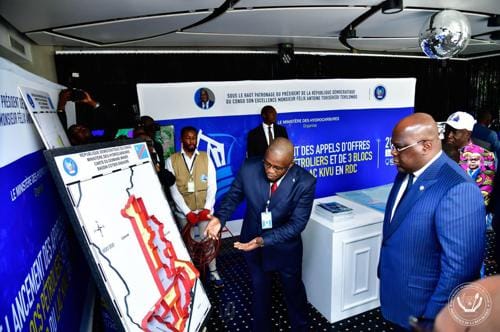
And yet the country remains in the dark. Only 21.5% of Congolese, about 23.4 million people, had access to electricity at the end of 2024. The state utility, SNEL, supplies about 2,100MW from an installed capacity of 2,800MW, and the unmet needs of mining operators exceed 1,500MW, to the point that several industrial firms import electricity from neighbouring countries.
A country that could power a continent cannot light its own villages. This is no geological fatality: it is the product of poor governance and corruption, compounded by insecurity in the east. When resource revenues vanish, dams are not built, power lines are not laid and the population foots the bill. According to Transparency International's 2025 Corruption Perceptions Index, DR Congo scores just 20 out of 100, ranking 163rd in the world.
Africa must wake up. Its citizens must recognise that oil, cobalt, gold or the waters of the Congo river are worth nothing if the revenues they generate disappear, and they must pile the pressure, at the ballot box, in the public square and online, on the states that plunder the common good.
Two countries in the region show that good governance is a work in progress, at different stages. Rwanda under President Paul Kagame stands out as a benchmark: it scored 58 out of 100 in 2025, its best result yet and a fourth consecutive year of improvement, and ranks 41st out of 182 countries.
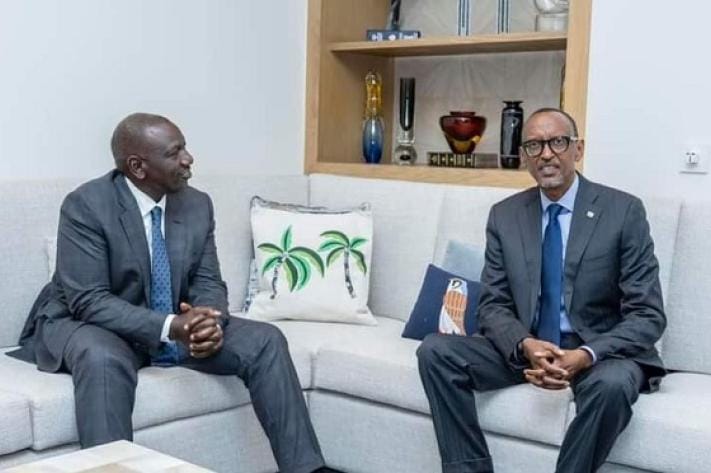
It is third in sub-Saharan Africa and first in East Africa, progress that Transparency Rwanda credits to reforms including the digitisation of public services, performance-based management and robust oversight institutions. Kenya under President William Ruto, meanwhile, has a solid economy that is under pressure: real growth reached 4.6% in 2025, in an economy worth 17.6 trillion Kenyan shillings, with average inflation of 4.1% and a stable shilling at around 129 to the dollar. Growth even accelerated to 5.3% in the first quarter of 2026, but the oil shock threatens that recovery, and debt servicing absorbs about a third of revenue. On corruption, the country remains on 30 out of 100, ranked 130th.
Comments
Join in — no account needed.
No one has replied yet. Start the conversation.