
Rwanda-Belgium: The End of a Rift, But Is It Also the End of the Dispute?
Belgium has adopted a markedly slanted and partial stance in favour of Kinshasa in the crisis rocking eastern DRC, laying the blame on Rwanda while remaining silent and indulgent towards the Tshisekedi regime's belligerent policy and its support for the FDLR.
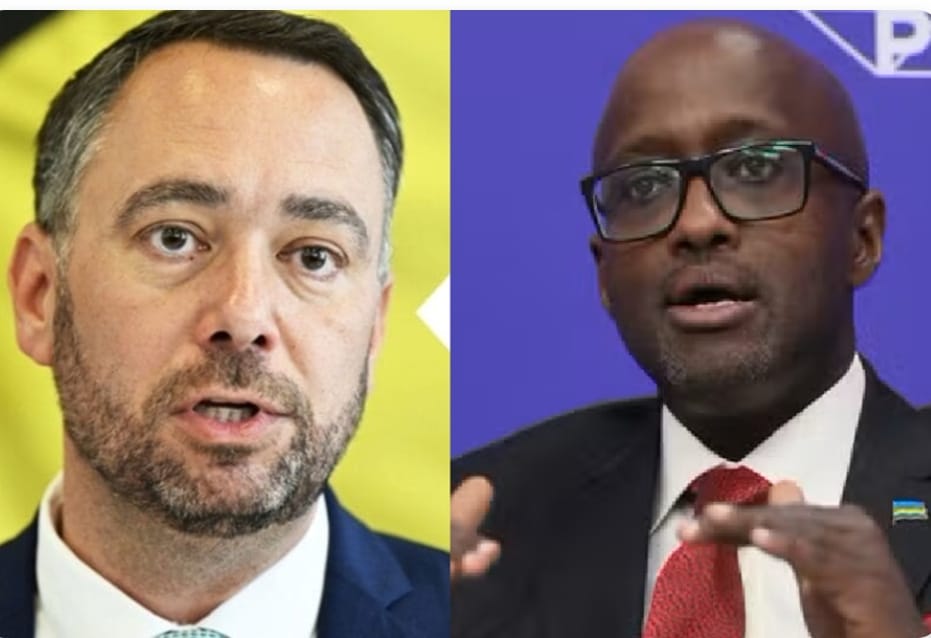
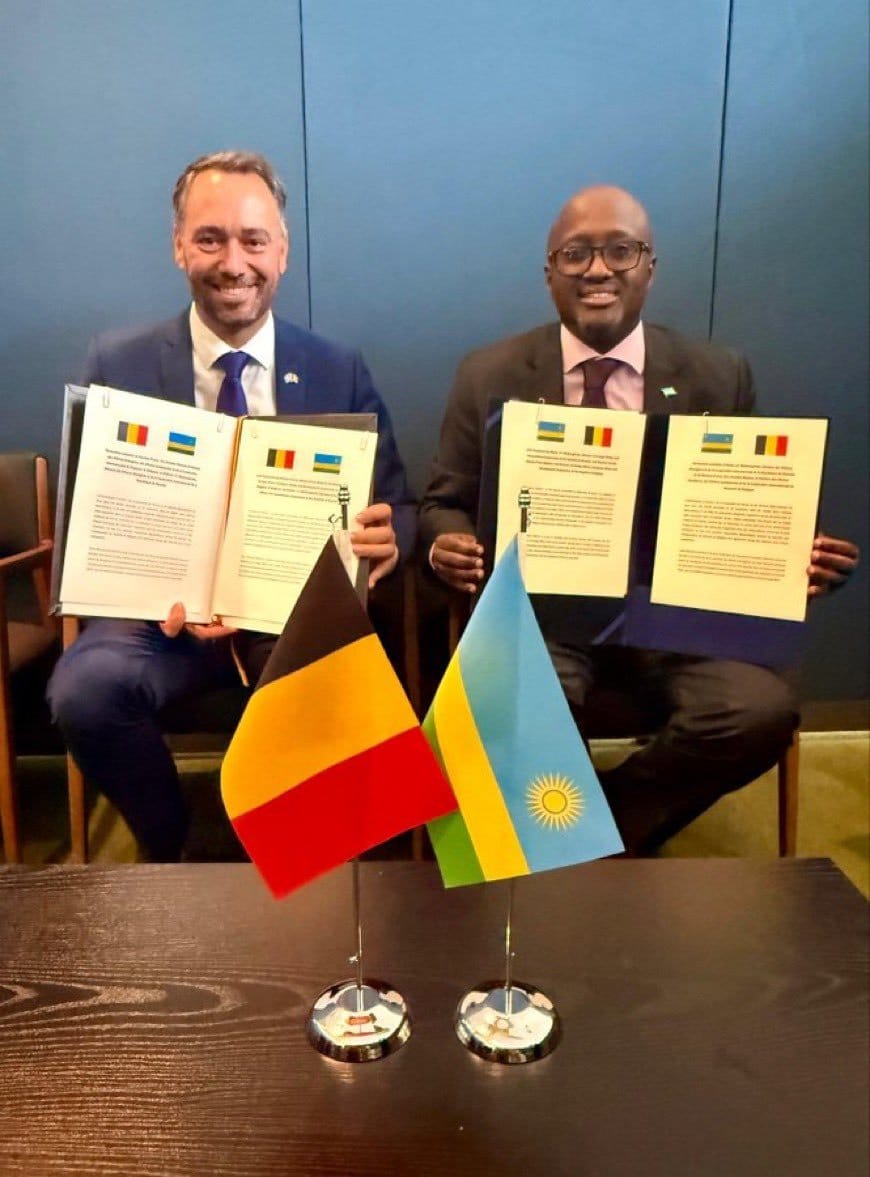
On 22 September 2026, in New York on the margins of the United Nations General Assembly, Rwandan and Belgian foreign ministers Olivier Nduhungirehe and Maxime Prévot announced the restoration of diplomatic relations between their two countries.
A handshake outside UN headquarters brought to a close eighteen months of severed ties, initiated by Kigali on 17 March 2025. Both embassies are to reopen shortly, initially with skeleton teams led by chargés d'affaires, ahead of the appointment of new ambassadors.
To understand the scale of the rift, one must return to the context in which it began.
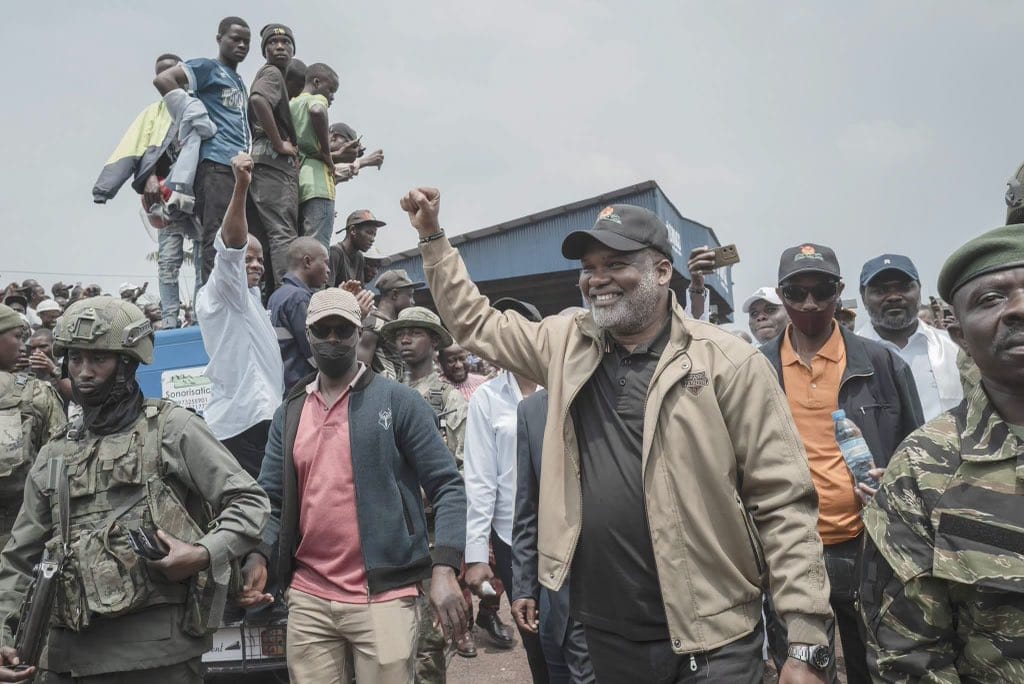
Since its resurgence in November 2021, the M23 later subsumed into the AFC/M23, a Congolese politico-military movement led politically by Corneille Nangaa, former chairman of the Congolese electoral commission, and militarily by General Sultani Makenga, and drawing its membership from Congolese nationals across several provinces rather than a single community waged a gradually escalating offensive in eastern Democratic Republic of Congo, which intensified in late 2024 and early 2025 with the capture of Goma and then Bukavu, the provincial capitals of North and South Kivu respectively.
Amid this protracted conflict, Brussels adopted a stance sharply critical of Kigali, pushing for EU sanctions and, in effect, aligning itself with Kinshasa's position. On 17 March 2025, the Rwandan government announced it was severing relations with Belgium "with immediate effect", denouncing what it called Belgium's "pitiful attempts to sustain its neo-colonial delusions" and a systematic campaign against Rwanda across international forums.
At the heart of Rwanda's grievance lies this imbalance: Belgium uncritically adopted allegations of Rwandan military backing for the AFC/M23, even though the movement is first and foremost a Congolese actor, rooted in a broad Congolese support base and in long-standing Congolese grievances that predate the current crisis. In Rwandan eyes, Brussels effectively became a diplomatic mouthpiece for Kinshasa, rather than acting as a neutral broker capable of grasping the deeper roots of instability in the Great Lakes region starting with the unresolved presence of armed groups such as the FDLR on Congolese soil.
That imbalance appears all the starker to Kigali given that Congolese President Félix Tshisekedi, who lived in Belgium for many years before taking office, has retained significant networks of influence there.
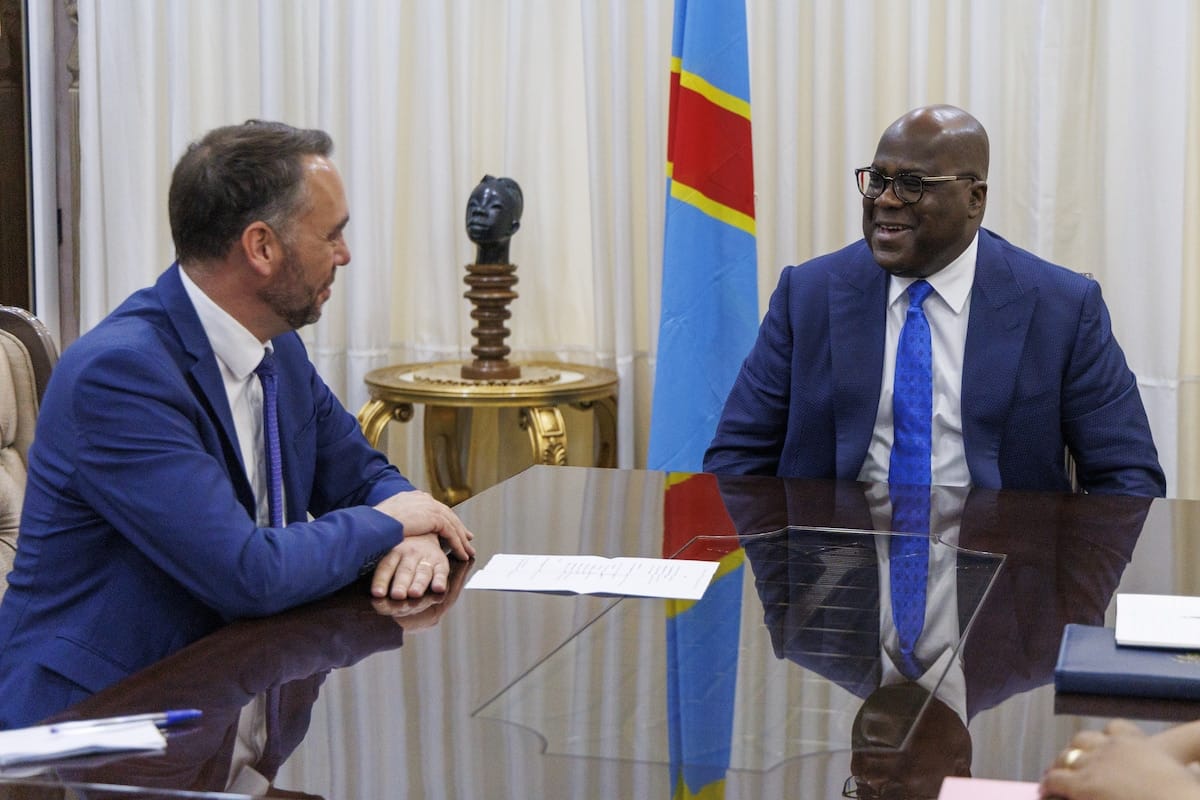
This proximity has fuelled, on the Rwandan side, a sense that Belgian diplomacy struggled to separate its role as a former colonial power from that of an impartial arbiter, extending to Kinshasa a leniency it withheld from Kigali.
That leniency, critics of Belgian policy argue, has been compounded by a prolonged silence over abuses committed under the Congolese government: targeted killings, enforced disappearances, arbitrary arrests of opposition figures and journalists, and, above all, the massacres of Banyamulenge civilians in South Kivu repeatedly documented by human rights organisations, yet never met with a diplomatic response from Belgium comparable in severity to that reserved for Kigali.
That silence, say critics, has extended even onto Belgian soil itself. The case of Congolese journalist Claude Pero Luwara, a political refugee living in Tienen, is perhaps the starkest illustration: targeted with a four-million-dollar bounty announced by former Congolese Justice Minister Constant Mutamba, who accused him without evidence of complicity with the AFC/M23, Luwara has been assaulted on several occasions near his home, most recently with a hammer in September 2026.
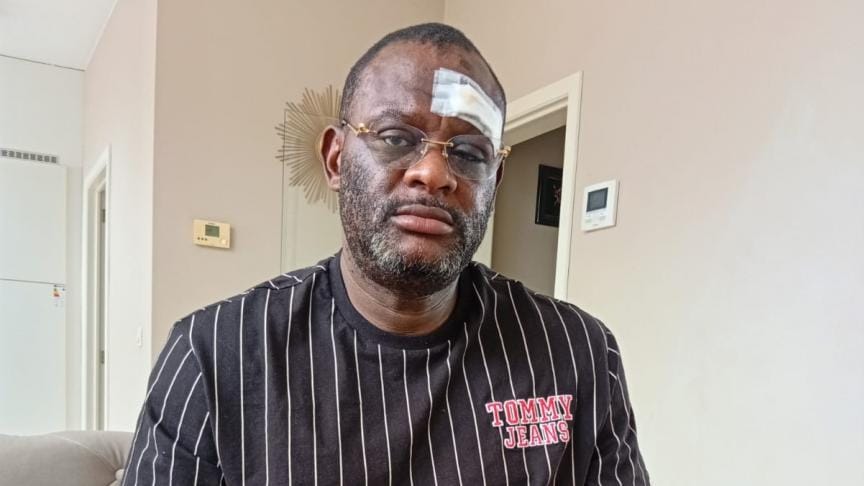
Belgian courts themselves acknowledged a "political motive" behind the attacks and convicted the assailants a clear-cut ruling, yet one that did not prevent such acts of transnational repression from recurring on Belgian soil without a forceful, proactive diplomatic response from Brussels towards Kinshasa.
Belgian reticence has also been called into question on another sensitive front: President Tshisekedi's moves to revise, or even rewrite, the Congolese constitution an undertaking viewed by parts of the Congolese opposition and civil society as an attempt to remain in power beyond current constitutional limits. Here too, Belgian diplomacy has failed to voice criticism on a par with that directed at Kigali.
Under this pressure, Kigali held firm. Throughout the eighteen months of rupture, Rwanda yielded to no Belgian ultimatum or diplomatic pressure: neither summonses, nor threats of further sanctions, nor media pressure shifted Rwanda's position, which consistently rejected allegations of military involvement in the conflict. The thaw came only through patient, discreet dialogue, beginning in June 2025 with Qatari mediation, which brokered a first meeting between the two ministers in Doha, followed by months of informal contacts that allowed both sides to address their differences and misunderstandings.
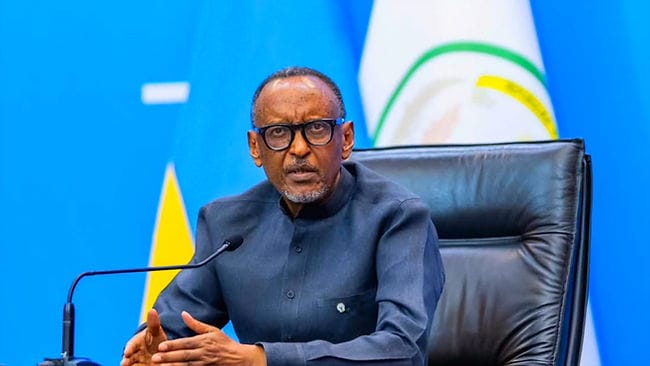
The joint statement issued after the New York meeting described it as "the culmination of a process of candid discussions" and "a mutual, respectful effort". Prévot was nonetheless careful to stress that the restoration of ties did not amount to an abandonment of Belgium's position on the territorial integrity and sovereignty of the DRC a sign that the underlying disagreements remain very much unresolved.
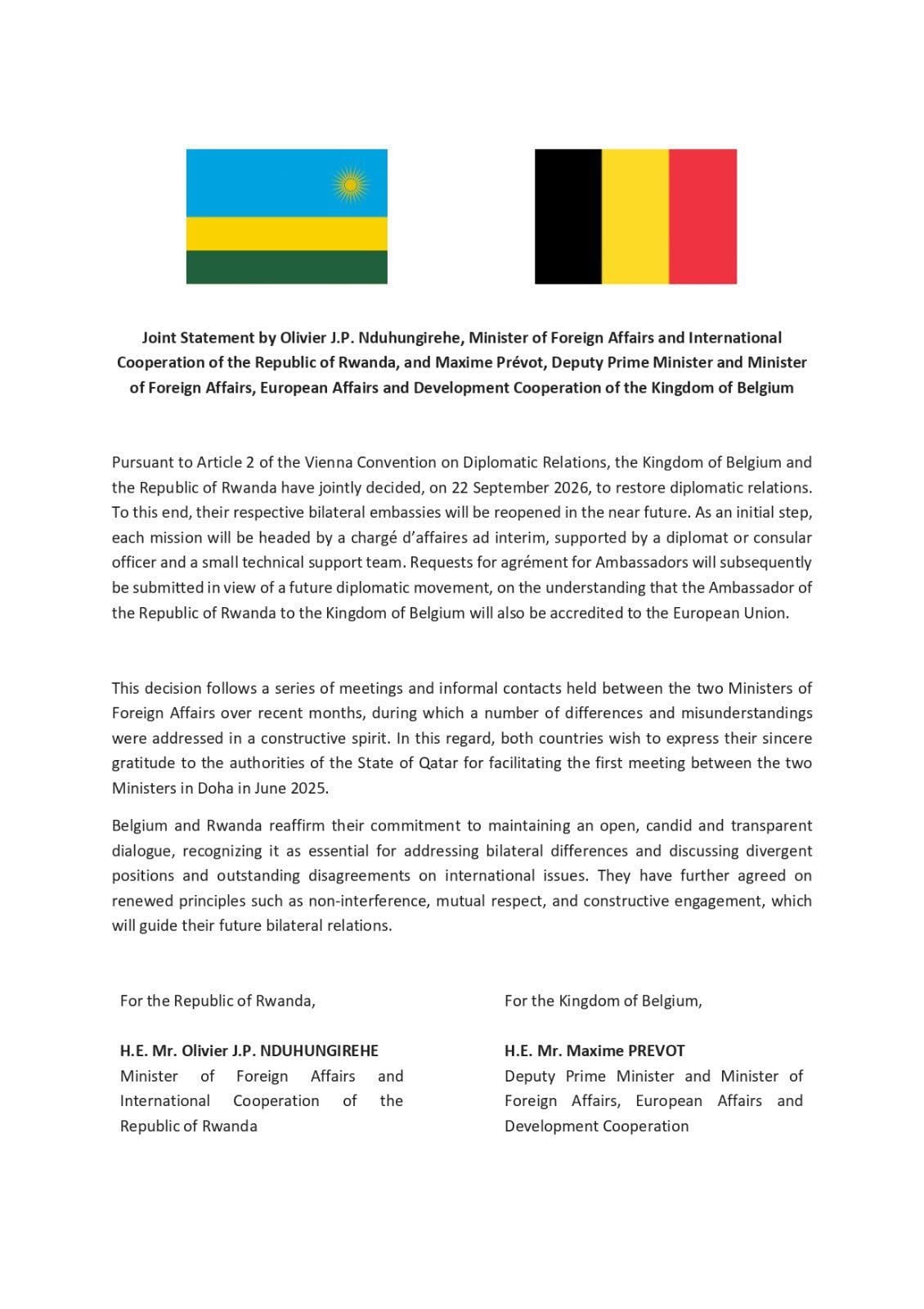
The resumption of diplomatic relations is, in itself, welcome news for the citizens of both countries: it reopens channels of economic, academic and consular cooperation that had been suspended, and provides a framework for dialogue that the rupture had made impossible.
Yet this normalisation can only bear lasting fruit if it rests on genuine mutual respect, rather than on the perpetuation of a relationship in which Belgium continues to cast itself as moral arbiter over its former colony. For many observers in Kigali, the real test will be whether Brussels is now able to treat Rwanda as an equal partner, shorn of the paternalistic reflexes inherited from its colonial past.
Comments
Join in — no account needed.
No one has replied yet. Start the conversation.