
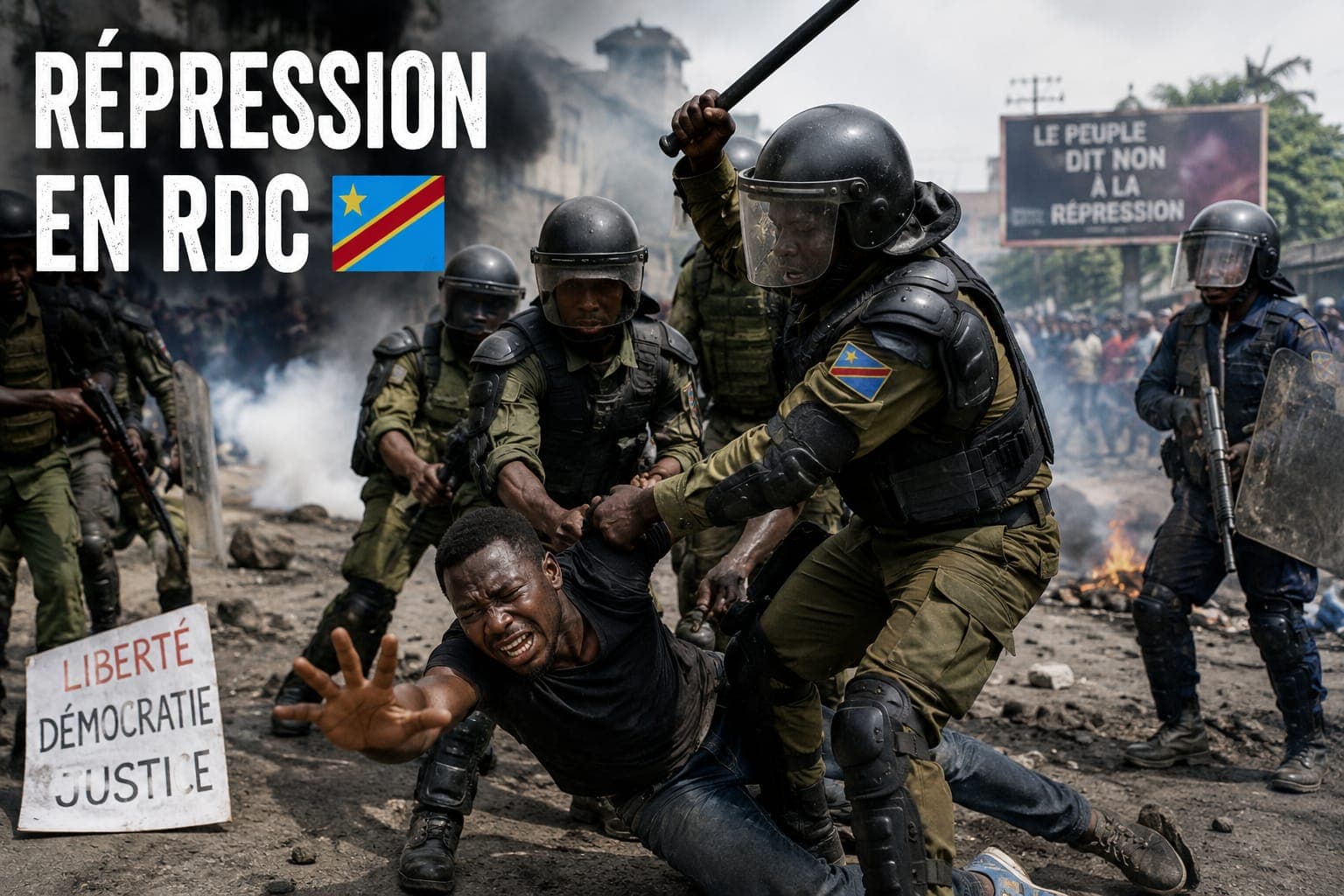
Repression in the DRC: the specter of exile and the hunt for dissident voices (2022–2026)
As arbitrary arrests, forced disappearances, and transnational repression multiply, the DRC regime is tightening its grip on every dissenting voice — from Kinshasa's prisons to the streets of Brussels and Bujumbura. Five experts trace the anatomy of a system that hunts its critics all the way into exile.
The Democratic Republic of Congo is sinking into an era of unprecedented terror. For several months now, a phenomenon as horrifying as it is undeniable has been gripping the country: a systematic wave of arbitrary arrests, enforced disappearances, and targeted detentions aimed at citizens who dare return to their homeland after stays abroad. In Kinshasa and other major cities, the verdict is unanimous: the regime has been imposing a totalitarian drift with growing brutality since 2022. Under the guise of maintaining order, the current government has put in place a relentless strategy to crush all dissent. Prisons have been turned into death traps for pro-democracy activists, whistleblowers, and political opponents, while critical voices are forced into exile to save their lives.
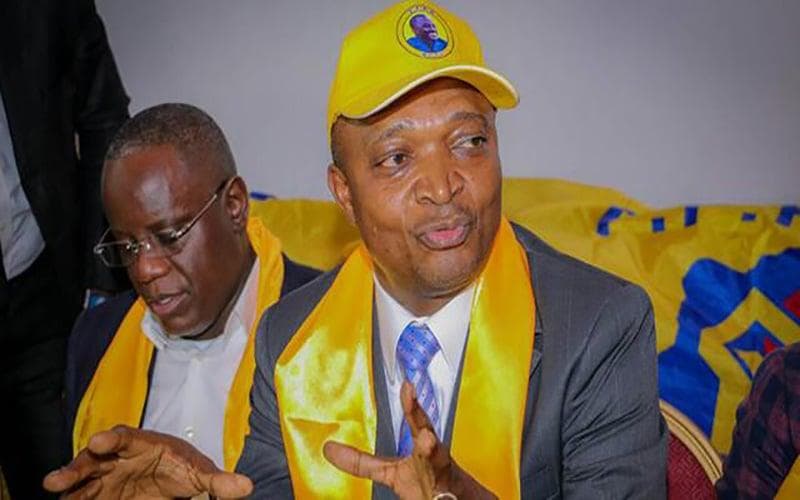
The climate of fear is such that, on April 13, 2026, in Kinshasa, Belgian Immigration Minister Anneleen Van Bossuyt revealed that in the first quarter of 2026, more than 450 Congolese nationals applied for asylum in Belgium — the vast majority for political reasons — an unprecedented figure. The same trend is observed in France, Switzerland, the United Kingdom, and Italy, where large numbers of Congolese are fleeing to seek asylum and escape the regime's policy of repression, tyranny, tribalism, and its war rhetoric in response to the situation in the east of the country. Today, prominent opposition figures are languishing in prison, including Aubin Minaku and Emmanuel Ramazani Shadari (PPRD), along with several dozen others such as Parole Kamizelo, Barnabé Milinganyo, and Nathanaël Onokonda
As if that were not enough, the regime has extended its crackdown beyond the country's borders. In the sub-region, notable cases include the abduction in Zambia of Pastor Daniel Ngoy Mulunda and Igor Muteb, as well as that of humanitarian worker Benjamin Babunga, arrested in Bujumbura at the express request of Kinshasa. In Belgium, journalist Claude Pero Luwara, along with opposition figures Seth Kikuni, Claudel Lubaya, and Don Pierro, have all been subjected to regime-sponsored attacks aimed at silencing them. Any voice that rises to defend a viewpoint different from that of the ruling UDPS party is systematically suppressed.

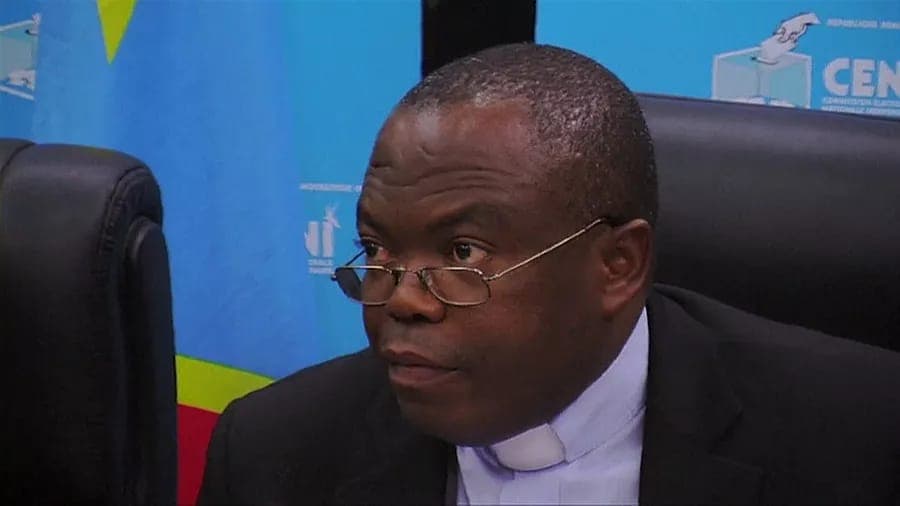
The constitutional revision project has further accelerated this slide: since the launch of the campaign to promote the draft constitution, the repressive apparatus has intensified. Anyone who opposes it is immediately branded a "Rwandan" or an "enemy of the Republic." Having initially expressed reservations, Professor Bahati Lukwebo (AFDC) was recently forced to walk back his statements under pressure. The regime's machinery activated a split within his political grouping, and he himself declared that he was being subjected to fiscal persecution. Furthermore, several members of his party were arrested on May 8, 2026, at the Beach Ngobila in Kinshasa as they were returning from Brazzaville.
The Democratic Republic of Congo now accounts for the largest number of African asylum seekers in Europe, the United States, and Canada. Notably, the vast majority of these individuals come not from the conflict-ravaged east, but from Kinshasa and other major cities under government control — painting an extremely grim picture of the current state of governance. To this must be added the merciless repression of ECiDé militants, the party of Martin Fayulu. For having protested against the results of the fraudulent 2023 elections, many of them have been imprisoned for months without ever being brought before a judge.
It is now clear that the Democratic Republic of Congo poses a very serious danger to any voice critical of the current regime. Congolese nationals who have left the country to live in the West face a high risk of imprisonment upon return, due to the regime's suspicions — heightened by recent diaspora demonstrations against misgovernance, tribalism, the bombing of civilians in the east by the Congolese army, and the constitutional revision project initiated by the Tshisekedi regime. In light of this, several observers are advising Congolese nationals abroad not to return, for their own safety.
P.Lem's Lunda Mulongo
Comments
Join in — no account needed.
No one has replied yet. Start the conversation.