
The Washington Accord: genuine intent from Kinshasa, or a mere sham on the FDLR?
On Tuesday 28 July 2026 Kinshasa announced the signing of a disarmament, demobilisation and cantonment protocol with the FDLR, presented as the fulfilment of its Washington Accord commitments. Kigali immediately brushed the announcement aside as a mere media artifice.
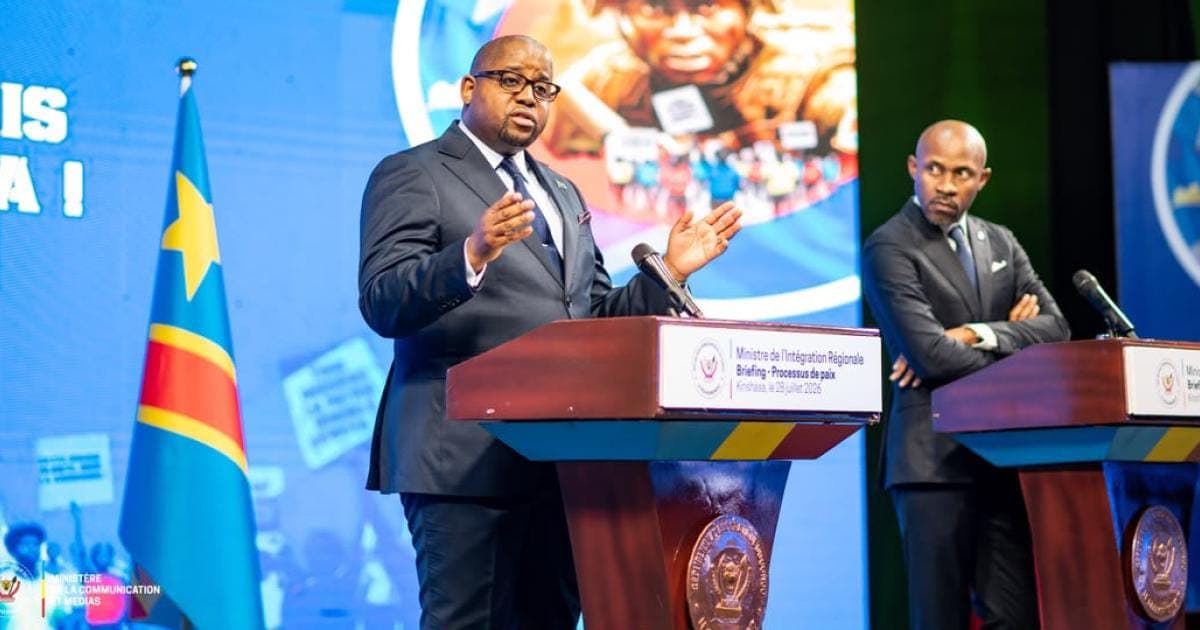
In the labyrinthine file of peace in the east of the Democratic Republic of the Congo (DRC), every diplomatic twist is scrutinised with formidable intensity. On Tuesday 28 July 2026 in Kinshasa, the Congolese government believed it had scored a decisive point. Through its Minister of Regional Integration, Floribert Anzuluni, Kinshasa officially announced the signing of a disarmament, demobilisation and cantonment (DDR) protocol with the Democratic Forces for the Liberation of Rwanda (FDLR).
Presented as the major fulfilment of the commitments made under the Washington Accord, this step — meant to strip Kigali's security pretexts of their substance — immediately ran into an icy rejection from Rwanda. Between a Congolese executive caught in its own strategic contradictions and an unyielding Rwandan neighbour, the sequence lays bare the fragility of regional peace architectures.
Kinshasa and the FDLR: the winding path of an official line
The announcement of this memorandum comes at the end of a political and military trajectory that has been, to say the least, a winding one on the Congolese government's part with regard to the FDLR. To grasp the real significance of today's event, it is worth measuring the distance Kinshasa has travelled in its official rhetoric:
- For a long time, at the outset of hostilities and faced with repeated accusations from Kigali and with UN reports, the Congolese authorities systematically denied any presence of, or organic collusion with, the FDLR on national territory.
- In an attempt at diplomatic de-escalation, Congolese government spokesperson Patrick Muyaya at one point played down the threat posed by the rebel movement. The argument then advanced was the advanced age of its fighters — mostly in their sixties — suggesting they were harmless relics incapable of threatening Rwanda's security.
- Faced with the lightning advance of the AFC/M23 rebellion, the official line had to shift. The Congolese government publicly acknowledged that significant pockets of the FDLR were in fact enmeshed in, or entrenched within, areas under AFC/M23 control.
- The breaking point came with the official launch, on 30 March, in Kisangani, of large-scale military operations to hunt down and neutralise the FDLR. An offensive that, despite the initial announcements, struggled to show tangible results on the ground before this negotiated cantonment agreement emerged.
What the protocol provides for
According to the details provided by Floribert Anzuluni, the protocol initialled by the political branch of the FDLR sets out a two-stage process.
In a first phase, the movement undertakes to accept the demilitarisation and regrouping of its troops. That acceptance is, however, conditional on strict guarantees demanded by the rebels:
- Burnt by the stinging failures of past disarmament programmes — often undermined by chronic insecurity and the lack of logistics around assembly sites — FDLR officials made the creation of high-security sanctuaries a sine qua non.
- Kinshasa conceded on a crucial point by guaranteeing that no forced repatriation to Rwanda would be carried out, favouring a voluntary-return approach.
In a second phase, the FDLR are said to have undertaken to pronounce the definitive dissolution of their armed movement and of their political structure. For the Congolese executive, this two-step approach serves a precise geopolitical objective: to deprive the Kigali regime once and for all of the existential argument of the "FDLR threat" that serves as an umbrella for its interventions and for its logistical support to M23 auxiliaries in eastern Congo.
Kigali denounces "a mere media artifice"
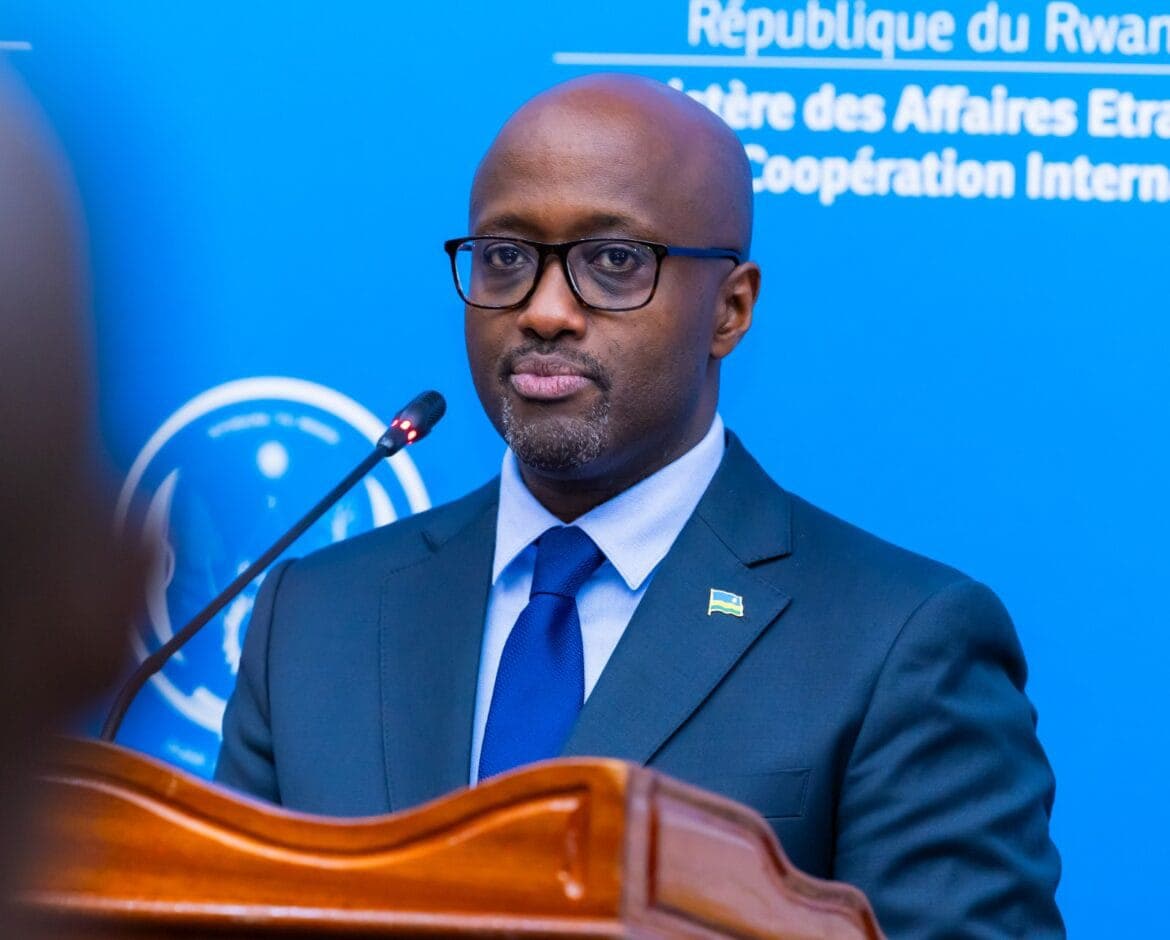
Kigali's reaction was not long in coming. On his official X (formerly Twitter) account, Rwandan Minister of Foreign Affairs Olivier Nduhungirehe brushed the announcement aside, calling it a mere media artifice.
For Rwandan diplomacy, this bilateral agreement between Kinshasa and the FDLR is fundamentally unlawful in the light of the Washington Accord. Nduhungirehe sharply criticised what he describes as a pact born of an "evil trinity" uniting the Congolese government, the FDLR and their original genocidal ideology.
The Rwandan foreign minister's central arguments rest on the following points:
- For Kigali, a negotiated cantonment agreement cannot substitute for the strict obligation of outright neutralisation, as stipulated by the Concept of Operations (CONOPS) and its implementation timetable, initially capped at 90 days.
- Rwanda maintains that since the signing of the peace agreements in late 2025, Kinshasa has never genuinely stopped coexisting with or lending support to the FDLR, going so far as to integrate factions of it into auxiliary forces or the ranks of the regular army, while encouraging their resurgence in civilian political clothing.
A double-edged diplomatic gamble
In the light of these developments, Kinshasa's initiative looks like a double-edged diplomatic gamble.
On the one hand, by demonstrating to the international community and to regional facilitators that it is taking concrete steps to disarm a historic rebel movement, the DRC is seeking to put the ball back in Rwanda's court. The equation Kinshasa poses is simple: if the FDLR security pretext disappears through cantonment and dissolution, keeping Rwandan troops or auxiliary militias on Congolese soil will lose all international legitimacy.
On the other, by rejecting the agreement outright, Rwanda confirms that the security dispute goes beyond the mere military existence of the FDLR and belongs to a struggle for regional hegemony, control of resources and the redrawing of spheres of influence. By calling the agreement a sham, Kigali ensures it maintains military and diplomatic pressure, while denying the Tshisekedi administration a cheap diplomatic victory.
A Washington peace that is listing
The disarmament protocol announced by Floribert Anzuluni illustrates the complexity of a peace kept on life support, where every humanitarian or security advance is immediately swallowed up by the war of narratives and mutual suspicion. As eastern DRC continues to pay the highest price for the upheavals of this regional geopolitics, the Washington peace is listing. More than ever, only rigorous and impartial international pressure, coupled with relentless monitoring of joint verification mechanisms, will be able to separate political calculation from the reality of a territory thirsting for stability.
Comments
Join in — no account needed.
No one has replied yet. Start the conversation.