The Muddled Message and Confused Agenda of the C64 Coalition
It must be said that the coalition's biggest problem is that it counts among its members some actors who share the Tshisekedi camp's biased reading of the country's political and security situation, such as Martin Fayulu, who is hostile to Congolese Tutsis and to Swahili speakers alike. Several sources also frequently speak of his discreet meetings with Félix Tshisekedi.
Formed on 19 May 2026 by several opposition figures in Kinshasa, namely Moïse Katumbi Chapwe, Matata Ponyo, Martin Fayulu, Delly Sesanga and Jean-Marc Kabund, the coalition set out with one aim: to block any attempt to amend or change the Constitution advocated by President Félix Tshisekedi and his camp, who want to seek further mandates even though he is serving his second and final term.
The coalition takes its name from Article 64 of the DRC Constitution, which makes it the duty of every Congolese citizen to thwart any individual or group that seizes power by force or in breach of constitutional provisions.
A good start and popular support
The public rallied behind the initiative quickly and in large numbers, because the vast majority of Congolese living in areas under the Tshisekedi regime's control have already had enough of it. On 3 June 2026, the C64 launched a "ville morte" (general stay-at-home strike) to paralyse economic activity and protest against the constitutional project. The coalition hailed strong public support, while the provincial government reported an unusual calm.
“The action was followed by a sit-in and demonstration in Kinshasa on 12 June 2026, which led to tensions and clashes and left several people dead and injured.”
Strategic errors and lost momentum
Having seen the popular backing for the C64, as well as images of the crackdown on protesters that travelled around the world, Félix Tshisekedi set a trap by turning to his friend Évariste Ndayishimiye, president of Burundi, with whom he is allied in a criminal military partnership against civilians in the two Kivu provinces.
“Ndayishimiye, using his position as current chair of the African Union, invited the C64 leaders to Bujumbura, ostensibly to mediate between the Congolese opposition and his friend Félix Tshisekedi. It was in fact a major trap, and the opposition walked straight into it.”
While the Burundian president secured the postponement of a large-scale C64 demonstration, the opposition got nothing in return. The Tshisekedi regime in Kinshasa carried on promoting its plan to change the Constitution, and continued to arrest and repress opponents.
“Several observers had warned of the consequences of the trip, which served only to break the coalition's mobilisation drive. The public was disappointed and saw the leaders' conduct as reckless and extremely naive; everything was ruined.”
“It must be said that the coalition's biggest problem is that it counts among its members some actors who share the Tshisekedi camp's biased reading of the country's political and security situation, such as Martin Fayulu, who is hostile to Congolese Tutsis and to Swahili speakers alike. Several sources also frequently speak of his discreet meetings with Félix Tshisekedi.”
Fayulu is also anti-Rwanda and, like the UDPS, believes that if the DRC is not advancing despite its mineral, forest and other resources, Rwanda is to blame. They even blame Rwanda for the plundering of Katanga's mineral wealth and for the numerous embezzlement scandals in the DRC.
From challengers to mediators
On 12 October, President Joseph Kabila Kabange took the helm of a political-military movement called the Front for the Refoundation of the Nation (FRN), which has replaced the AFC/M23. He is supported by His Excellency Bertrand Bisimwa, a historic figure of the M23, and by former CENI chairman His Excellency Corneille Nangaa.
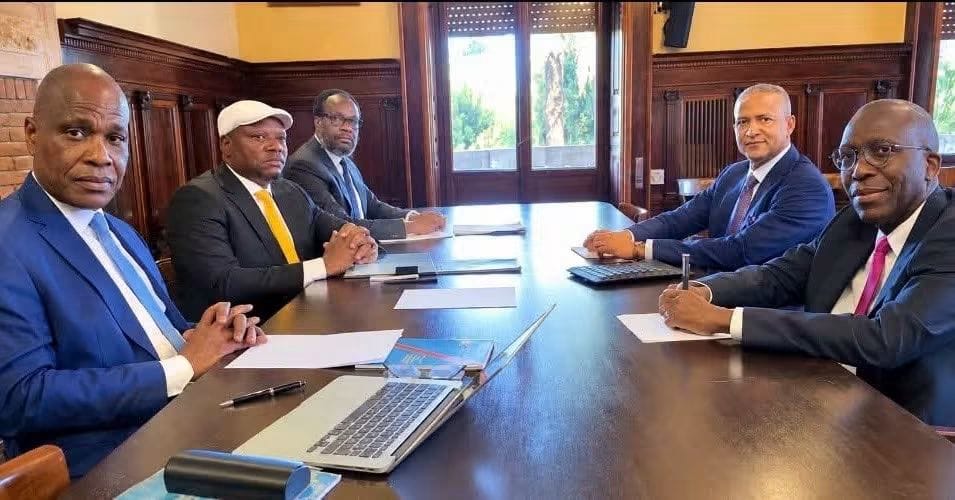
Soon afterwards, the C64 leaders arranged to meet in person in Rome, Italy, since two of them, Moïse Katumbi Chapwe and Augustin Matata Ponyo, are in exile and unable to return home.
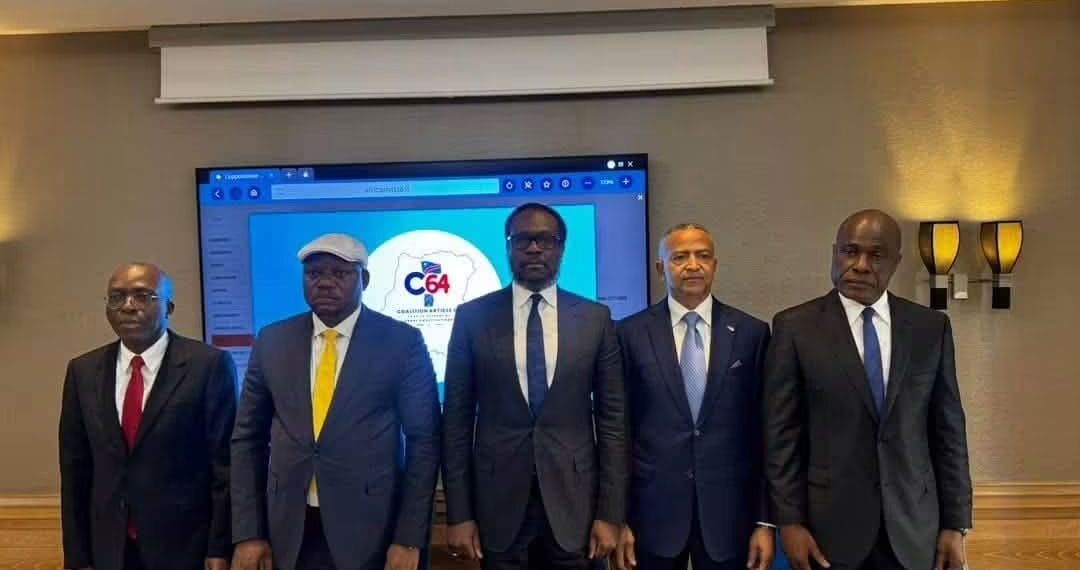
At the end of their first in-person conclave, held on 26 and 27 October 2026 in Rome, the five leaders of the Article 64 Coalition (C64), Martin Fayulu, Moïse Katumbi, Delly Sesanga, Augustin Matata Ponyo and Jean-Marc Kabund, issued a joint statement setting out their political strategy, which in reality looks like a confused one.
The C64 is seeking to establish itself as an independent alternative both to Félix Tshisekedi's government and to former president Joseph Kabila's Front for the Refoundation of the Nation (FRN).
“At the same time, it is trying to play the role of mediator between the FRN, which has taken up arms to end the dictatorship and defend the Constitution and good governance, and Félix Tshisekedi, who insists he will change the Constitution. Yet, as we said at the outset, the C64 was created to defend the Constitution, and it is now turning itself into a mediating body between those who defend it (the FRN) and those who violate it and are determined to change it (the Tshisekedi camp).”
“The credibility of a political organisation or politician is also judged by consistency in the struggle. The C64 is stumbling along through trial and error, naive in the face of political traps and manipulation.”
Comments
Join in — no account needed.
No one has replied yet. Start the conversation.