
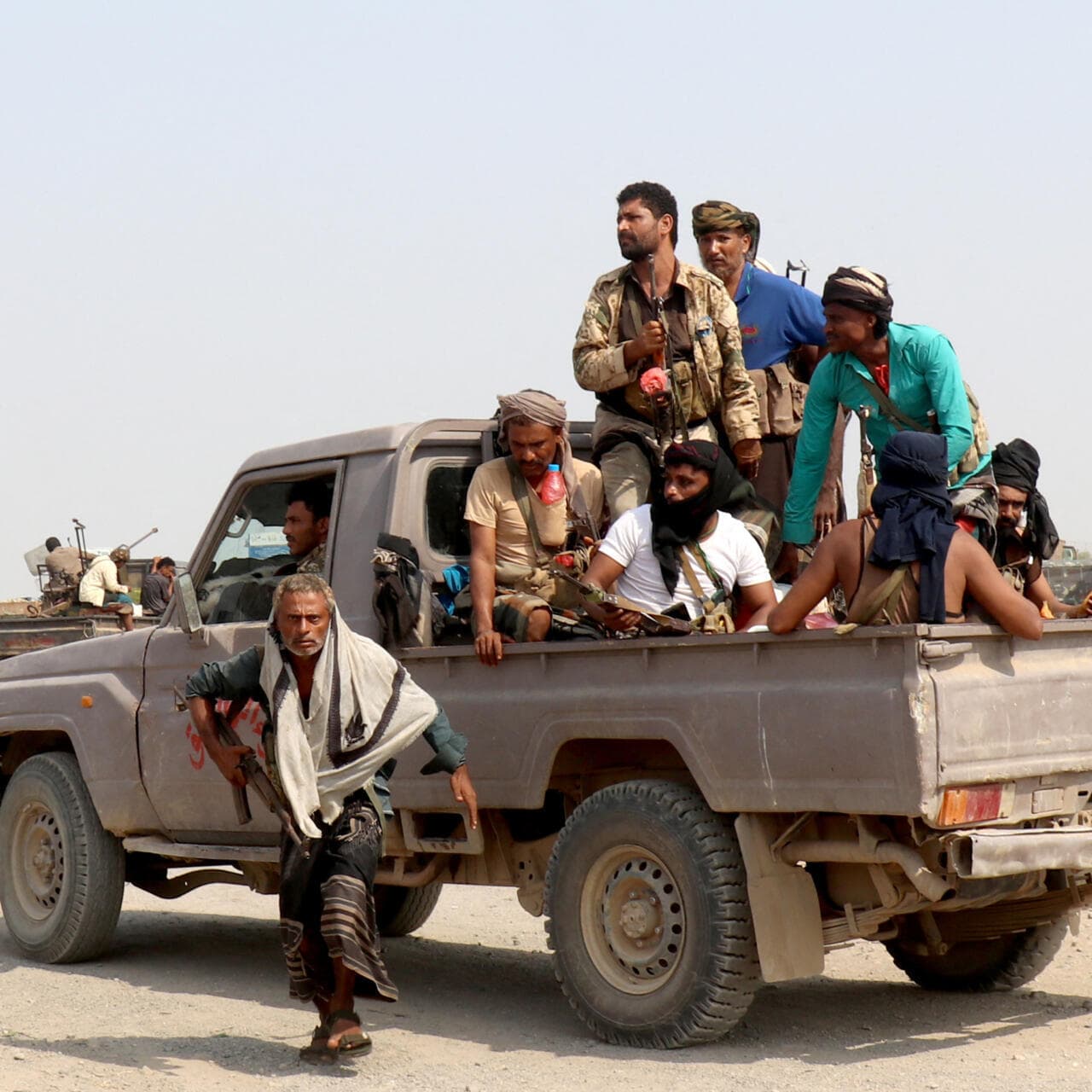
The lightning-fast military offensive by the Houthis, an Iran-backed Shia militia in Yemen, has radically altered the balance of power and triggered a major escalation. Following the definitive collapse of the ceasefire that had held since 2022, the pro-Iranian rebels launched a full-scale offensive.

The offensive began with massive assaults in Taiz Governorate aimed at cutting off the city from the coast. Although the government attempted counter-offensives (notably in Al-Jawf and Al-Bayda), the withdrawal of certain government troops facilitated the insurgents' sweeping advance.
Concentrated along the country's western seaboard, the rebels secured crucial territorial gains, taking total control of this global maritime choke point by seizing the coastal town of Dubab and the strategic island of Perim at the mouth of the strait.
Following intense clashes with forces loyal to the Yemeni government the Presidential Leadership Council (PLC), backed by Saudi Arabia the rebels also captured the strategic port city of Mokha and Zuqar Island.
Regional and international consequences
Emboldened by their territorial victories, the Houthis stepped up ballistic missile and drone strikes targeting Saudi territory, hitting the King Khalid Air Base in Khamis Mushait as well as Aramco facilities in Najran. In retaliation, the Riyadh-led coalition bombed the rebels' northern stronghold.
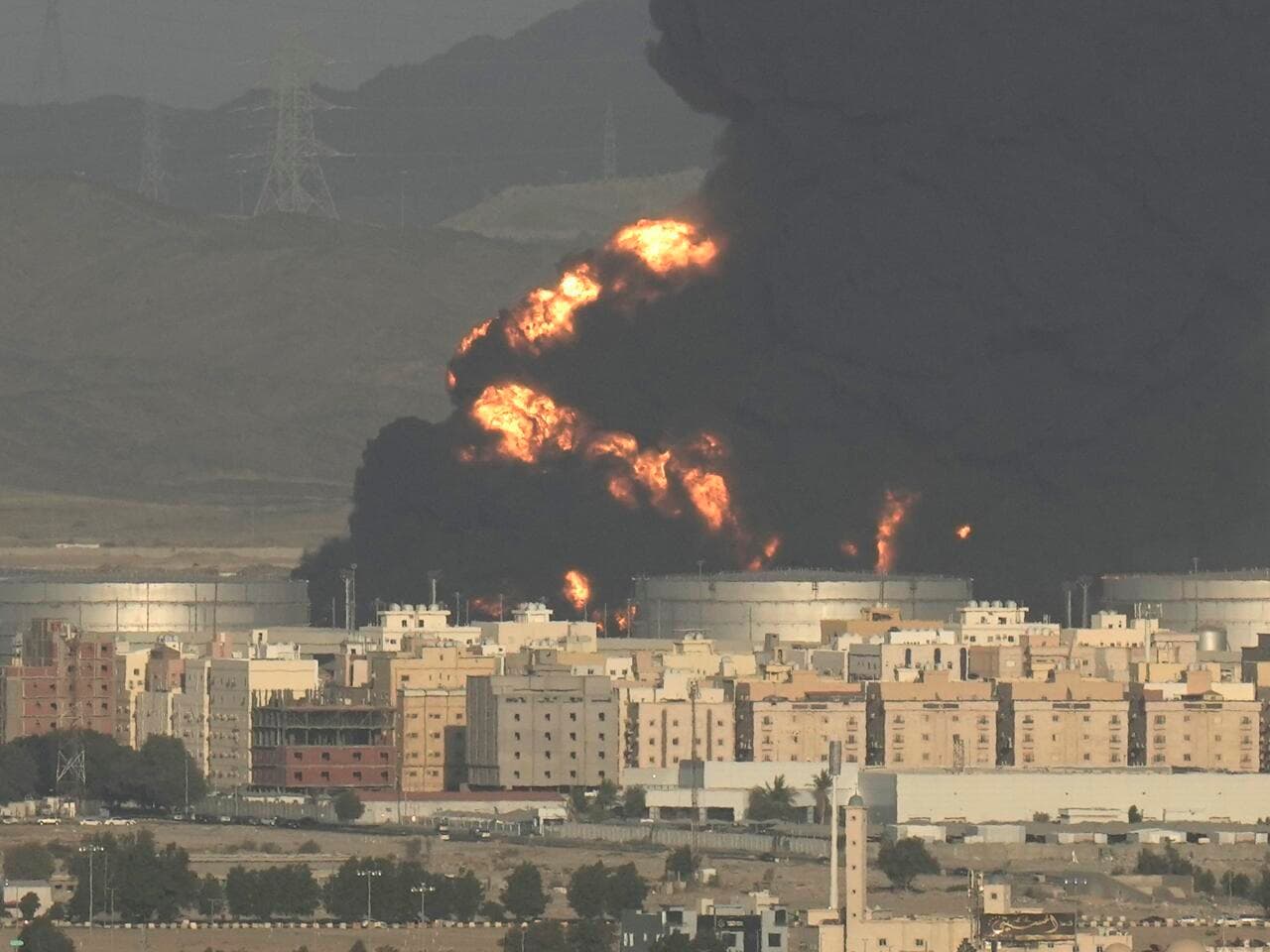
Houthi forces have also targeted Saudi vessels and tankers in the Bab el-Mandeb Strait, a vital shipping lane for the kingdom at a time when the Strait of Hormuz is already disrupted by Iran.
The world's leading crude exporter sees its primary export alternatives compromised, placing a heavy burden on its revenues and national security.
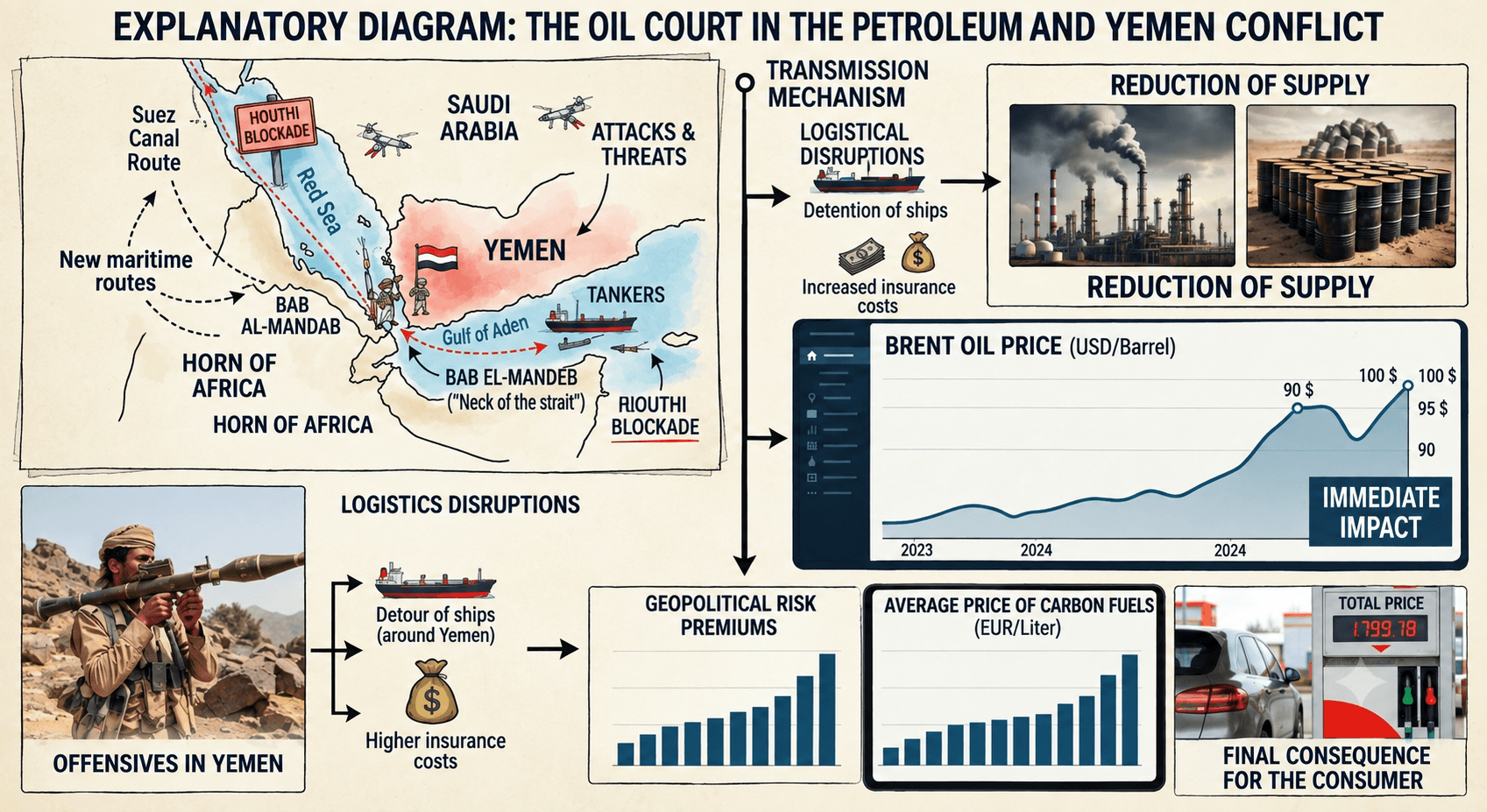
With a significant share of global oil transiting via the Red Sea and the Suez Canal, ongoing attacks and the threat of a blockade have sent shipping and insurance costs soaring.
Economic impact on maritime traffic
The security and fluidity of the Red Sea are vital for global trade, as nearly 12% of international trade volume and a crucial share of energy flows and manufactured goods pass through it daily to connect Asia and Europe. Faced with escalating missile strikes and boardings, major global shipping lines have been forced to suspend voyages through the Suez Canal or reroute their fleets.
This chronic insecurity compels vessels to bypass the entire African continent via the Cape of Good Hope. This detour extends journey times by 10 to 15 days, generates massive fuel overconsumption, and permanently disrupts global supply chains, causing cascading delays in European and Asian ports alongside heightened pressure on freight rates.
Brent crude prices reached $108.75 per barrel, while US WTI climbed to $105.83. Analysts fear that prolonged energy tensions could weigh on global economic growth and fuel inflation.
Iran, the militia's patron, is using this victory as a geopolitical lever against Washington and the Gulf states. A crucial diplomatic meeting scheduled to be held in Oman was postponed in the wake of the sweeping field developments.
Humanitarian toll
This return to total war has triggered an immediate humanitarian disaster. Fighting along the Red Sea coast has sparked a fresh mass exodus, forcing nearly 94,000 civilians to flee the violence. With internally displaced persons camps in Yemen saturated, thousands of refugees are now crossing the sea aboard unseaworthy vessels in a bid to find refuge in Djibouti.
Comments(1)
Join in — no account needed.
Patrick maswa·
Félicitations pour le travail bien fait