
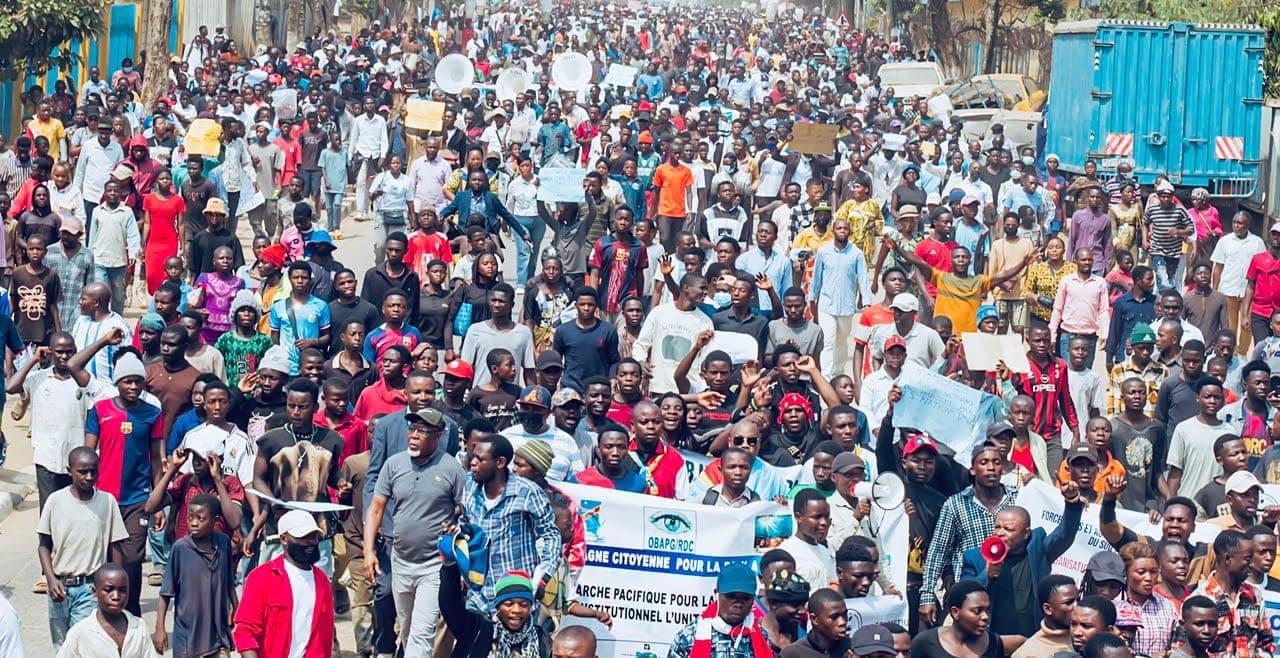
Mass civil society mobilisation in Goma and Bukavu: UN sanctions rejected, constitutional change opposed, banking crisis denounced
On Tuesday 28 July 2026, thousands of residents poured into the streets of Goma and Bukavu at the call of civil society organisations to denounce the UN sanctions, reject the proposed constitutional change and demand the reopening of the banks.
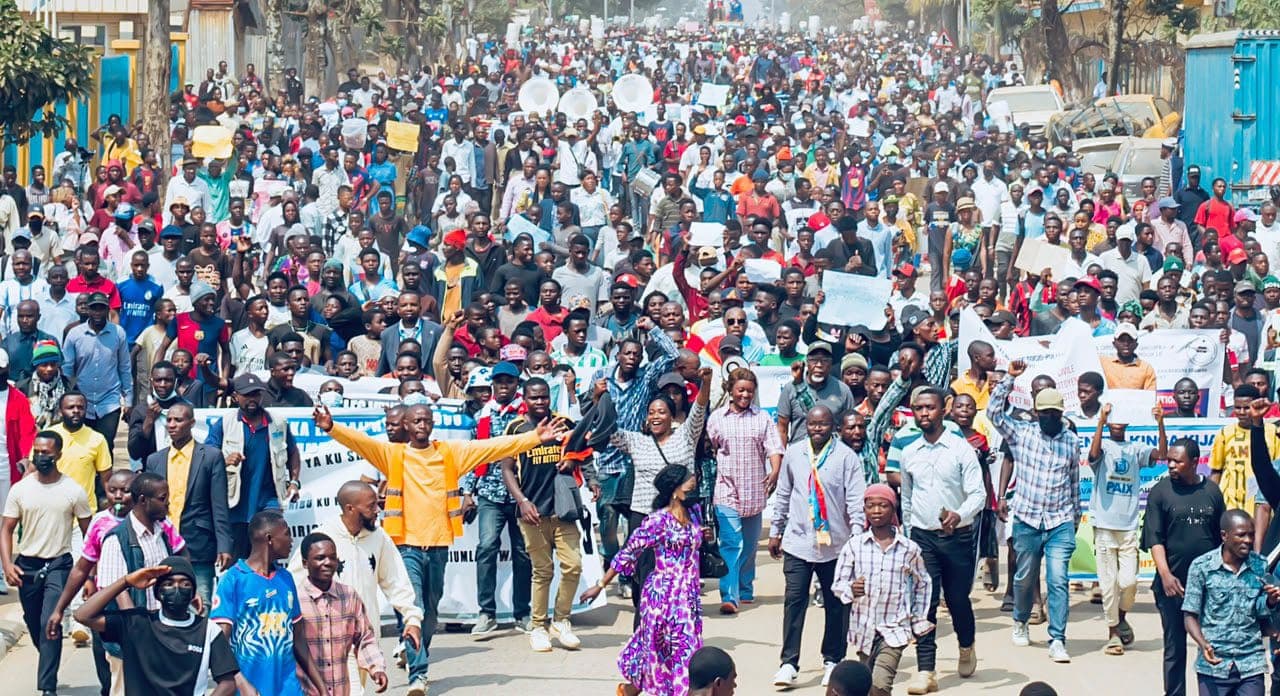
On Tuesday 28 July 2026, thousands of residents poured into the streets of Goma in North Kivu and Bukavu in South Kivu at the call of civil society organisations. At the heart of this large-scale cross-provincial mobilisation, demonstrators voiced deep anger at what they describe as a "double standard" and at the targeted sanctions issued by the UN Security Council's Sanctions Committee on 14 July 2026. Those coercive measures, which strike the AFC/M23 political-military alliance as an entity, its coordinator Corneille Nangaa and Colonel John Imani Nzenze, are seen by the local population as a unilateral step ill-suited to an ongoing negotiation process and, moreover, one liable to undermine the chances of an equitable peace.
A unanimous rejection of the proposed constitutional change
In Goma as in Bukavu, the popular protest went far beyond diplomatic and security concerns to carry strong local political and socio-economic demands. Participants voiced a categorical and unanimous rejection of the plan to change the Constitution, marking their fierce opposition to the initiative in a particularly tense national political climate. The opposition suspects President Félix Tshisekedi of seeking to use the shift to a new basic law to cling to power — a prospect strongly denounced by residents of the east of the country, scarred by the several decades of successive crises the DRC has endured.
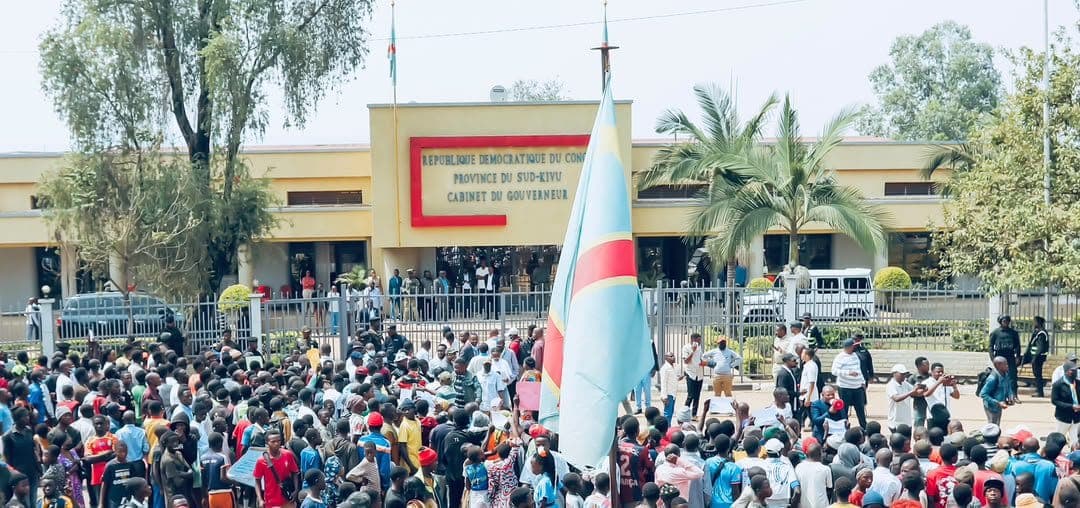
Reopening the banks, the central demand
On the placards and banners carried throughout these simultaneous marches, another crucial demand dominated the gatherings: the urgent call for the immediate reopening of banks in areas under AFC/M23 control. The closure of the banks is paralysing the economy in AFC/M23-controlled areas, on strict orders from the Kinshasa government since the capture of Goma and Bukavu. These financial institutions are leaving the population and economic operators in a state of total asphyxiation, depriving citizens of access to their assets and paralysing the entire regional economy through broken supply chains and the impossibility of carrying out any formal commercial transaction.
The protesters' three demands
- Withdrawal of the UN sanctions, seen as ill-suited in the middle of a negotiation process.
- Abandonment of the plan to change the Constitution.
- Immediate reopening of banks in areas under AFC/M23 control.
Comments
Join in — no account needed.
No one has replied yet. Start the conversation.