
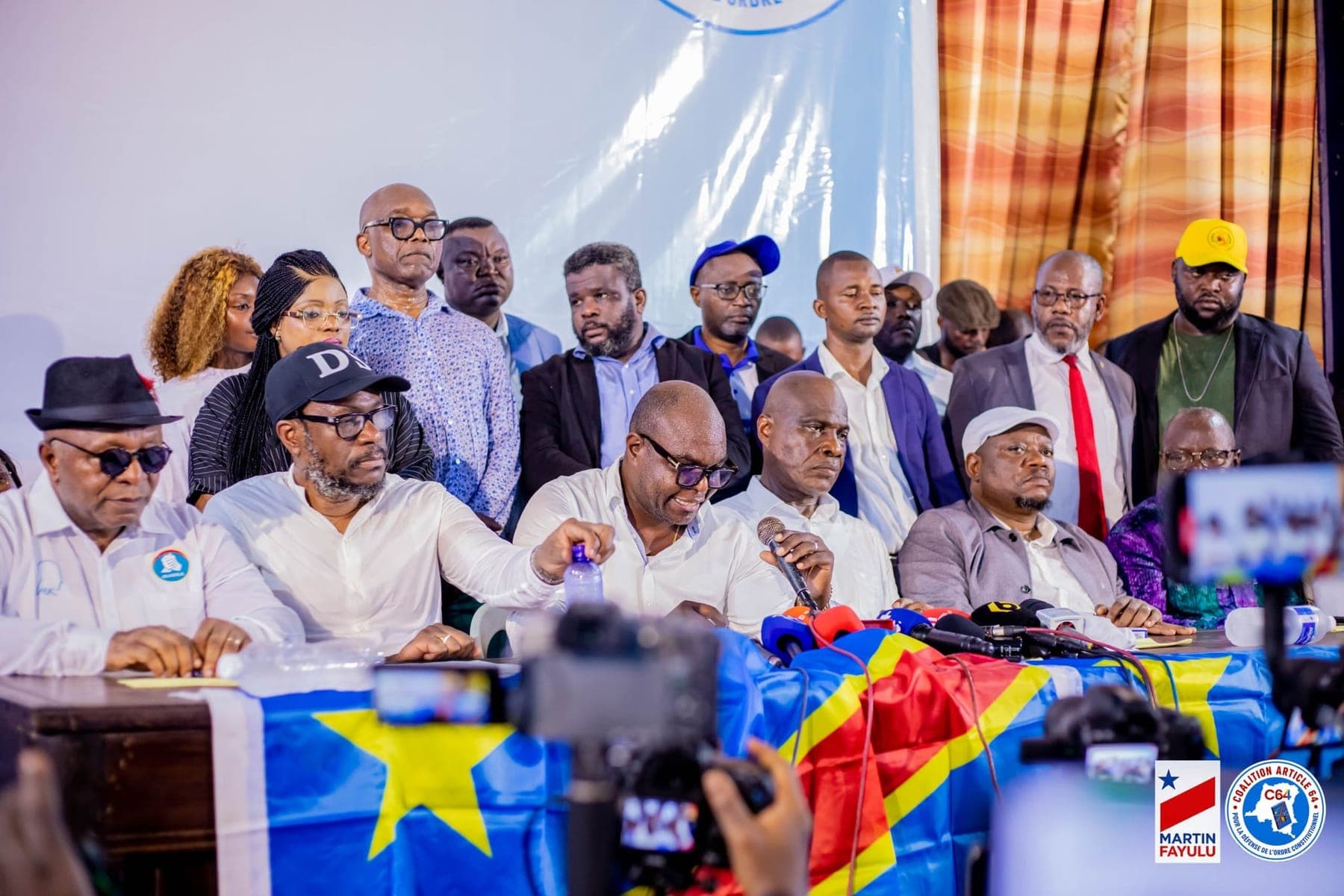
Tshisekedi's Strategy of Duplicity and Political Cunning: The C64 Outwits the Trap
Following this meeting held in Kinshasa on August 28, 2026, the C64 calls on the Congolese people to participate massively in a national march on September 15, 2026, to counter the constitutional change project.
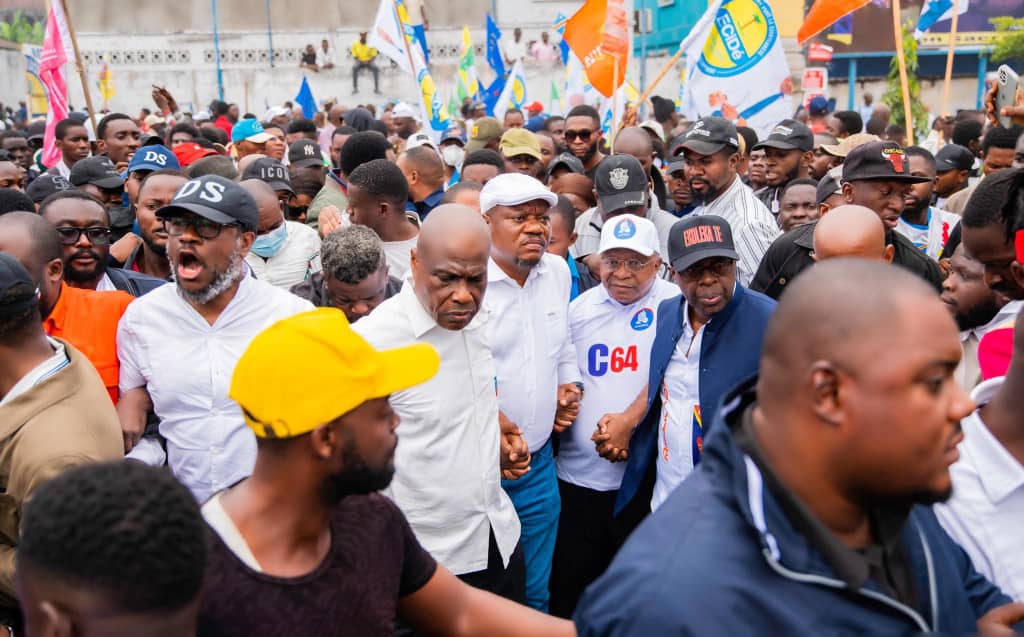
Born from the opposition's political intent to block President Félix Tshisekedi's efforts to amend the Constitution to run for further presidential terms beyond his second and final mandate expiring in 2028, the Article 64 Coalition (C64) has organized protest actions in Kinshasa. These included a sit-in and a peaceful march that resulted in several casualties due to a crackdown by police and the ruling party's militia, the Forces du Progrès.
To halt the momentum of this opposition coalition, which had planned further demonstrations, Félix Tshisekedi turned to his counterpart Evariste Ndayishimiye President of Burundi and current Chairperson of the African Union who recently invited the Congolese opposition to Burundi to persuade them to postpone their protests.
Immediately afterward, Félix Tshisekedi summoned religious leaders to inform them of his intention to convene an inclusive political dialogue aimed at resolving the political and security crisis in the DRC.
However, several observers had already warned against Félix Tshisekedi's strategy, arguing that he was merely buying time to concoct a plan that would lull the opposition into complacency and draw them into his constitutional amendment agenda.
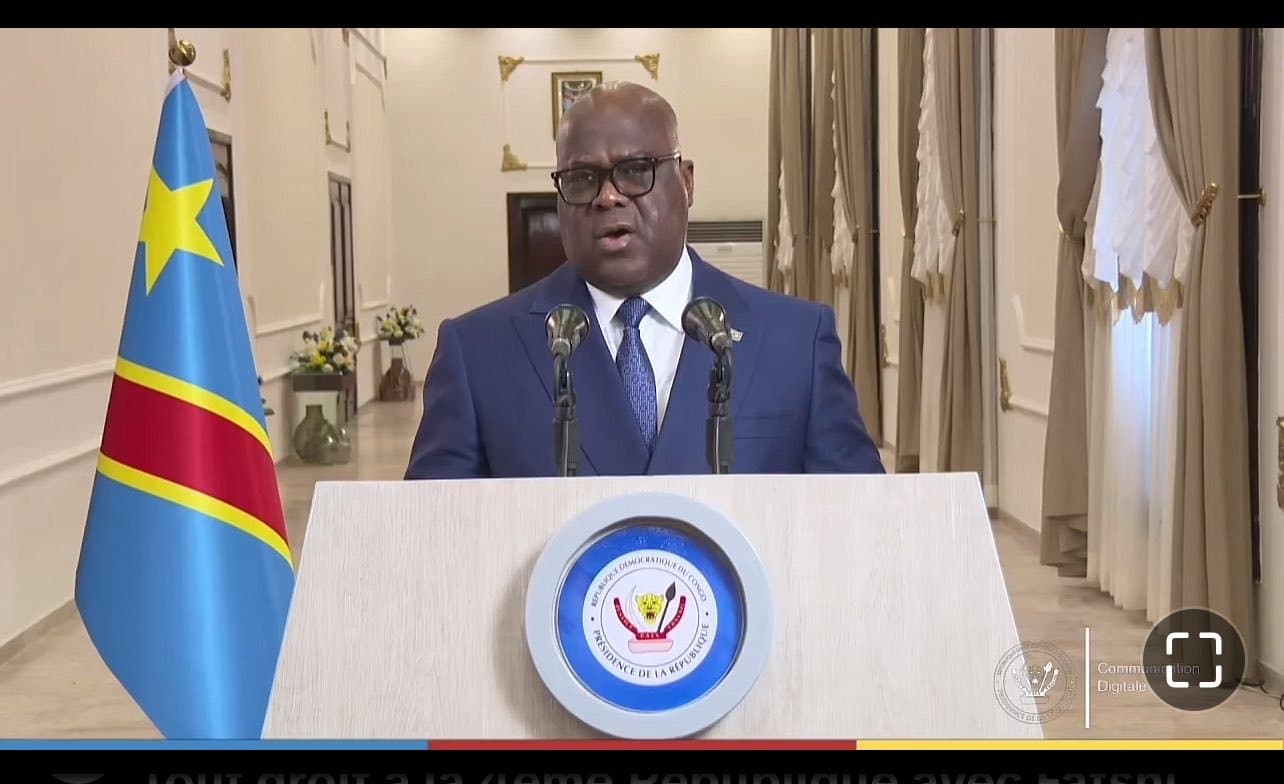
This suspicion was confirmed during his address to the nation on August 27, 2026, where Félix Tshisekedi chose to convene a dialogue in which he acts as both an interested party and an arbiter, reserving the right to select participants as well as define the rules and resolutions.
In the past, Angola acting as the African Union mediator in the Congolese crisis had proposed a realistic framework for a genuine dialogue aimed at establishing lasting peace in the DRC. However, Kinshasa gave that initiative a cold shoulder because it suggested the participation of all actors, including the AFC/M23, a Congolese military movement controlling large parts of North and South Kivu.
It is worth noting that while Kinshasa talks of a national dialogue and alludes to the Doha process, it continues, on the one hand, to launch military attacks against areas controlled by the AFC/M23 and, on the other hand, to pull out all the stops to secure a constitutional amendment to keep Félix Tshisekedi in power indefinitely. The administration also continues to finance and encourage hate speech targeting specific communities, such as Congolese Tutsis and Katangais.
This hypocrisy severely undermines any prospect for the DRC to achieve peace, stability, and genuine development a trap that the C64 has successfully identified this time around.
Key points of the C64 coalition's Declaration
- The coalition strongly opposes the so-called popular consultations initiated by Félix Tshisekedi, believing they distract the country from its true priorities (war, insecurity, health crises, and social distress).
- The C64 asserts that these "general states" mask a maneuver aimed at changing the Constitution to allow a third term for Félix Tshisekedi and favor the balkanization of the country.
- The coalition hammers home that "Congo does not belong to Mr. Félix Tshisekedi" and reiterates a double categorical refusal: no to changing the Constitution and no to a third term.
Call to action
“Following this meeting held in Kinshasa on August 28, 2026, the C64 calls on the Congolese people to participate massively in a national march on September 15, 2026, to counter the constitutional change project.”
Comments
Join in — no account needed.
No one has replied yet. Start the conversation.