
KAMPALA BACKS KINSHASA INTO A CORNER
Uganda appears to have grown increasingly exasperated by the Kinshasa regime's inability to manage its internal crises, as well as by what it sees as a policy of constant complaints, playing the victim and looking for scapegoats. Kinshasa's irresponsibility is pushing Uganda to the limit, as Kampala cannot indefinitely continue to compensate for the Congolese regime's failures in matters of security. 'We will not support or facilitate foreign mercenary forces that work with violent militia groups to terrorise vulnerable communities in eastern DRC.'
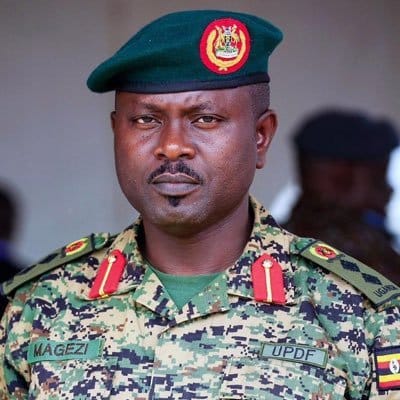
In a statement released on Friday, 27 November 2026, Colonel CHRIS MAGEZI, Acting Director of Defence Public Information at Uganda's Ministry of Defence and Veterans Affairs (UPDF), set out Uganda's position on the security situation in eastern Democratic Republic of Congo (DRC).
Ugandan UPDF troops have been deployed in the DRC since November 2021 as part of operations to combat the Allied Democratic Forces (ADF), a terrorist group affiliated with the Islamic State. The operations have primarily targeted Virunga National Park, as well as the territories of Beni and Lubero in North Kivu and Irumu in Ituri Province.
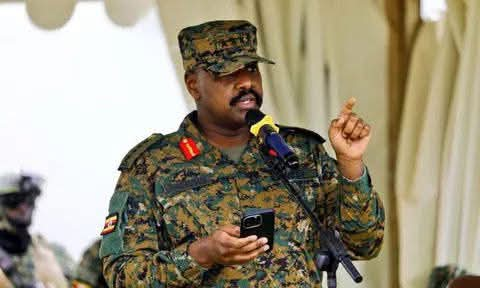
A few days ago, General Muhoozi Kainerugaba, Uganda's Chief of Defence Forces (CDF) and son of President Yoweri Museveni, openly declared in a series of posts on the social media platform X that the Ugandan army would neither engage nor resist the troops of the FRN, led by President JOSEPH KABILA KABANGE.
This prompted the government in Kinshasa to summon Uganda's chargé de mission at its embassy in Kinshasa on Tuesday, 24 November 2026, to seek clarification, according to the wording used by the Congolese authorities.
Uganda's pragmatism and firmness in its dealings with Kinshasa
In a statement entitled 'Response to Reports in Kinshasa Over General Muhoozi Kainerugaba's Statements on the Security Situation in Eastern DRC', the Ugandan army announced the withdrawal of its troops from Lubero territory within the next two weeks.
The Uganda People's Defence Force (UPDF) also voiced strong opposition to the alleged funding of illegal armed groups by the Kinshasa regime, stating:
“'It is also true that there are other negative armed groups operating in the region, some of which are apparently government-allied militia forces such as the Wazalendo. These negative militia forces have increasingly mounted attacks against vulnerable communities, massacring women and children, including members of the Bahema and Tutsi communities in Ituri and North Kivu Province. Under International Humanitarian Law (IHL), the UPDF retains the responsibility to extend protection to such vulnerable communities and will continue to do so whenever possible.'”
“It is widely known that the Kinshasa regime has, to date, spent several billion US dollars financing the war in eastern DRC. Faced with the inability of the Congolese Armed Forces (FARDC) to defeat the FRN, a Congolese revolutionary movement formerly known as AFC/M23, Kinshasa has turned to white mercenaries, but also, and above all, to former Mai-Mai armed groups that have spread death and terror across eastern DRC. These groups have all been brought together under an umbrella structure known as WAZALENDO.”
These militias, allegedly financed by Kinshasa, have been implicated in numerous human rights violations, including massacres, the recruitment of children, rape and the persecution of civilians in areas under their control. It should also be noted that the Wazalendo are reportedly sponsored by several prominent political figures from eastern DRC, including JULIEN PALUKU, MOHINDO NZANGI, JUSTIN BITAKWIRA, CRISPIN MBINDULE and WILLY MISHIKI, to name but a few.
“Uganda appears to have grown increasingly exasperated by the Kinshasa regime's inability to manage its internal crises, as well as by what it sees as a policy of constant complaints, playing the victim and looking for scapegoats. Kinshasa's irresponsibility is pushing Uganda to the limit, as Kampala cannot indefinitely continue to compensate for the Congolese regime's failures in matters of security.”
Uganda has therefore refused to give in to what it regards as blackmail, a tactic that appears to have become a hallmark of Congolese diplomacy. Instead, it has chosen to hold Kinshasa accountable for its responsibilities in the field of security governance. Furthermore, the Ugandan army, which is deployed in eastern DRC, is well aware that public opinion in the areas where its troops operate is favourable to the FRN led by Joseph KABILA KABANGE. Uganda, therefore, cannot stand in the way of the aspirations of a sovereign people.
“Finally, the Uganda People's Defence Force (UPDF), and by extension the Ugandan government, fully supports a peaceful resolution of the conflict in eastern DRC between the various armed groups involved and the Congolese government.”
Comments
Join in — no account needed.
No one has replied yet. Start the conversation.