
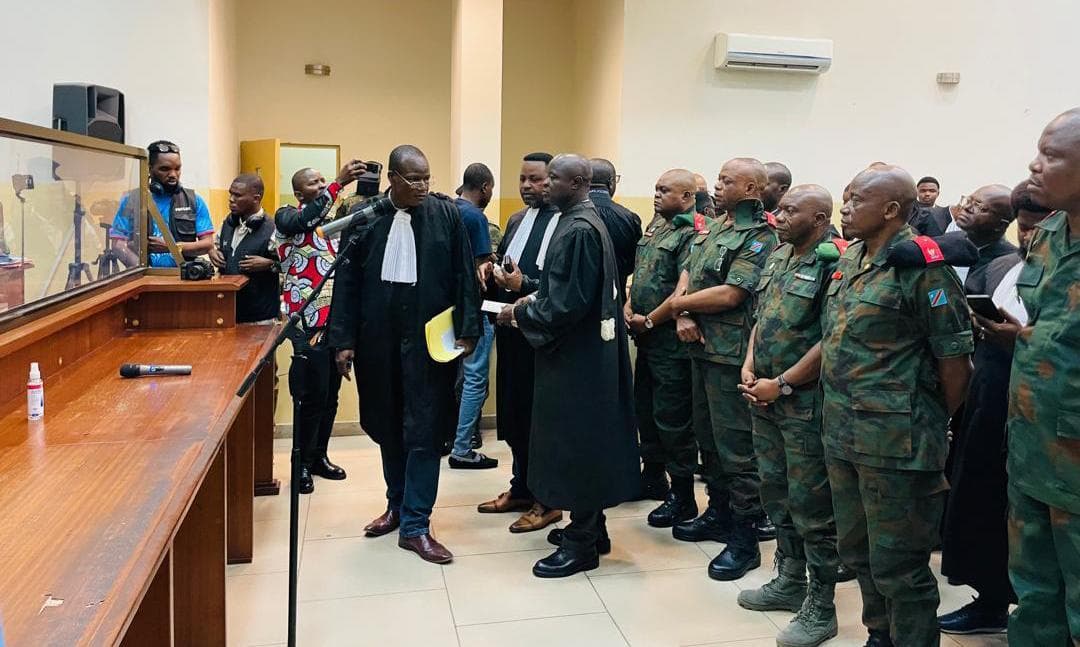
FARDC High-Ranking Officers trial
Between Suspicions of Ethnic Purge, Instrumentalization of Justice, and the Peril of Army Tribalization
Kinshasa, August 13, 2026 The judicial soap opera involving the highest-ranking officers of the Armed Forces of the Democratic Republic of the Congo (FARDC) and civilian figures took a new turn this Thursday, August 13, 2026, before the High Military Court sitting in Kinshasa. Caught between major procedural challenges, persistent suspicions of a targeted purge, and fears of a creeping tribalization of security institutions, this trial is shaping up to be one of the most closely scrutinized and sensitive in the country's recent political and military history.
Genesis and Framework of an Explosive Dossier
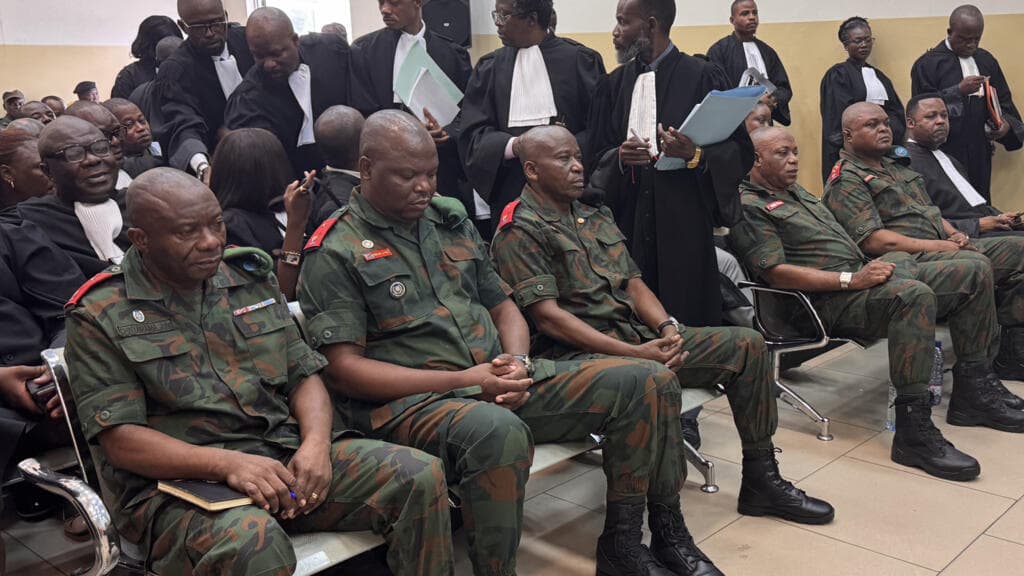
This high-profile trial involves ten general and senior officers as well as one civilian, facing heavy charges related to state security, military discipline, and assimilated offenses.
Among the main defendants are prominent figures of the Congolese security apparatus:
- Army General Christian Tshiwewe, former Chief of the General Staff of the FARDC
- Army General John Numbi, former Inspector General of the FARDC
- Major General Maurice Nyembo Kufi
- Brigadier Generals Chinyabuuma Kamukinde, John Ngoy wa Kabila, and John Sangwa Muhemedi
- Colonels Guy Mukombozi Zahinda, Pathy Sangwa Lumbu, and Christophe Tshibangu Kenge
- And from the civilian sector, Pascal Nyembo Muyumba, former Director General of the Center for Evaluation, Expertise, and Certification (CEEC).
From the outset, the investigation of this case has raised sharp questions regarding guarantees of a fair trial. In a context where justice both military and civil remains structurally under the thumb and instructions of those in power, observers agree that the outcome of this case seems dictated by political agendas rather than strict compliance with the rule of law.
Hearing of August 13, 2026
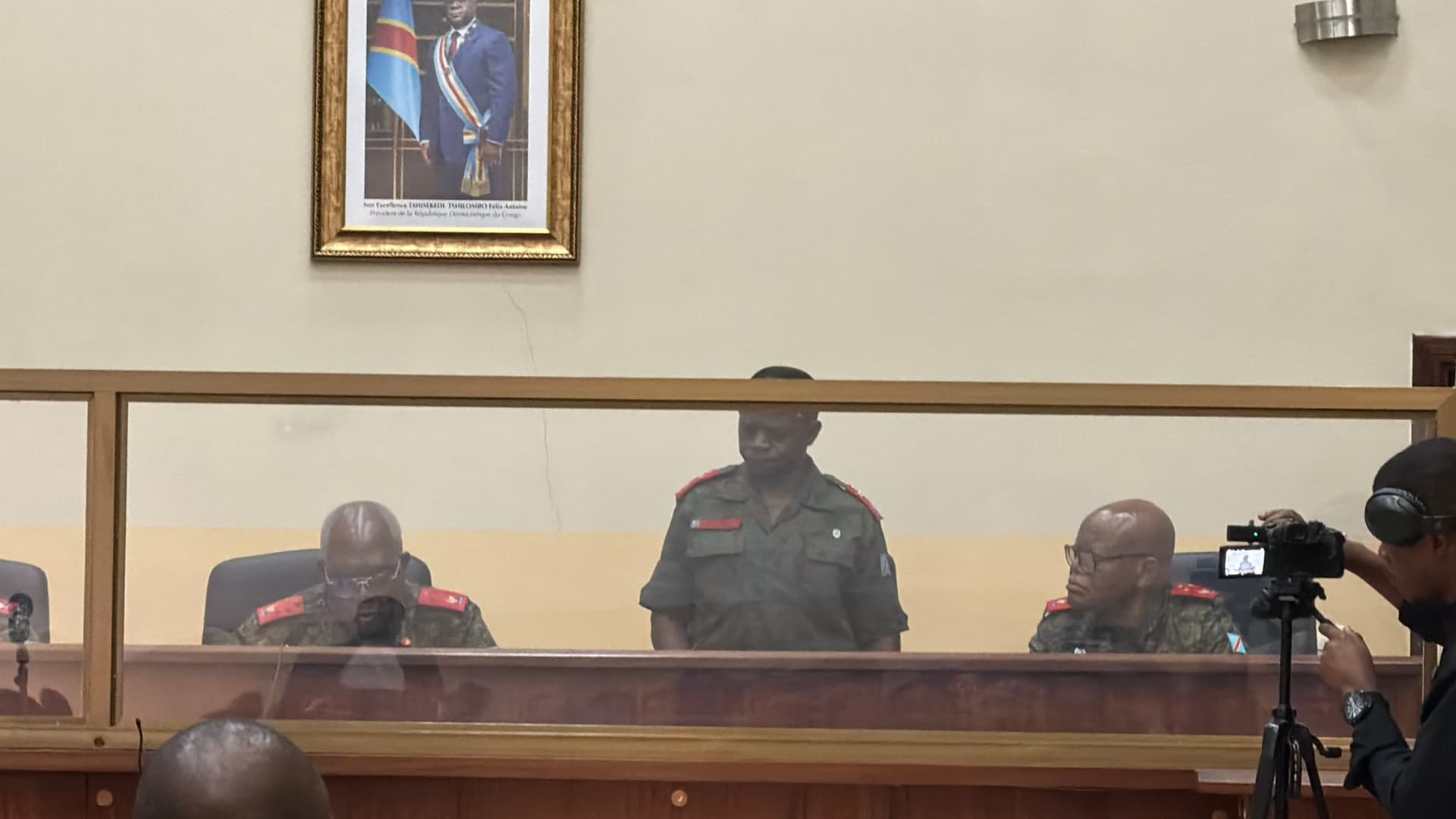
This Thursday's hearing began with a formal yet crucial procedural act: in accordance with Article 27 of the Military Judicial Code, Lieutenant-General Padiri David, the new assistant judge, took the oath of office. He swore to "loyally fulfill" his duties as president and member of the high court, "to keep the deliberations secret, and to judge the persons brought before us without hatred, without fear, without complacency, with the sole will to execute the law."
However, the core of the debates quickly shifted to the regularity of the investigative procedures. Taking the floor, the defense hammered the foundations of the prosecution.
Me Jeannot Bukoko, counsel for General John Ngoy Wa Kabila (military magistrate and former aide-de-camp to former President Joseph Kabila), stepped up to demand that the High Military Court outright dismiss all reports drawn up by a judicial police officer (OPJ) from the National Cybersecurity Council (CNC) described as "without standing."
“To apprehend, arrest, detain, search, seize, or refer... Where did these people derive this competence? questioned the lawyer, who asked the High Military Court to set aside all acts carried out by the CNC, arguing that "these acts upon which the public ministry relies cannot sustain your conviction.”
The Shadow of a Targeted Purge and the Peril of Army Tribalization
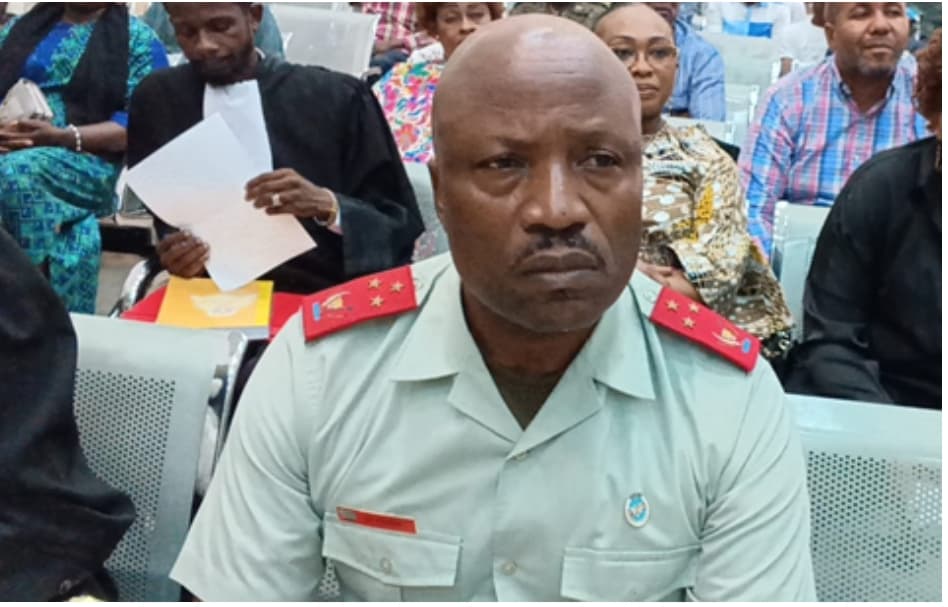
Beyond the procedural flaws raised by the defense, it is the very sociology of the defendants that fuels the worst fears among the general public. A meticulous analysis of the accused list reveals a manifest overrepresentation of senior and general officers originating from the Swahili-speaking linguistic space.
This reality feeds the deep-seated conviction within a large segment of the public that this is a targeted purge operation against Swahili-speakers within the FARDC and security services in the DRC. This sense of exclusion is exacerbated by the fact that Kinshasa's prisons already house a considerable number of other Swahili-speaking and Kinyarwanda-speaking officers imprisoned under similar grounds, such as General Philémon Yav, Zelwa Katanga, as well as numerous junior officers.
The Deadly Danger of Ethnic Fragmentation
This deleterious climate highlights an existential threat to the Congolese nation: the progressive tribalization of the army, police, and security services.
Transforming defense institutions guarantors of territorial integrity and national unity into arenas for political and ethnic score-settling fragments the social fabric and demoralizes the troops. An army undermined by tribalism and identity doubts loses its republican compass, paving the way for deep fractures whose consequences could prove fatal for the stability of the DRC.
Comments
Join in — no account needed.
No one has replied yet. Start the conversation.